 English EN
 中国 CN
中国 CN
.png)

How a Pistachios Optical Sorting Machine Guarantees Quality and Purity
Pistachios are a premium, high-value commodity. Co...
More

An automated flavored tea sorting machine delivers unmatched speed and consistency for large-scale production. Manual sorting, conversely, offers superior precision ideal for artisanal teas. The flavored tea market's significant growth underscores the importance of choosing an efficient sorting method.
| Metric | Value (Source 1) | Value (Source 2) |
|---|---|---|
| 2024 Market Size | $235.94 Billion | $3.43 Million |
| 2035 Market Size | $541.32 Billion | $8.76 Million |
| CAGR (2025-2035) | 7.84% | 8.86% |
Producers must weigh these factors to align their sorting strategy with business goals.
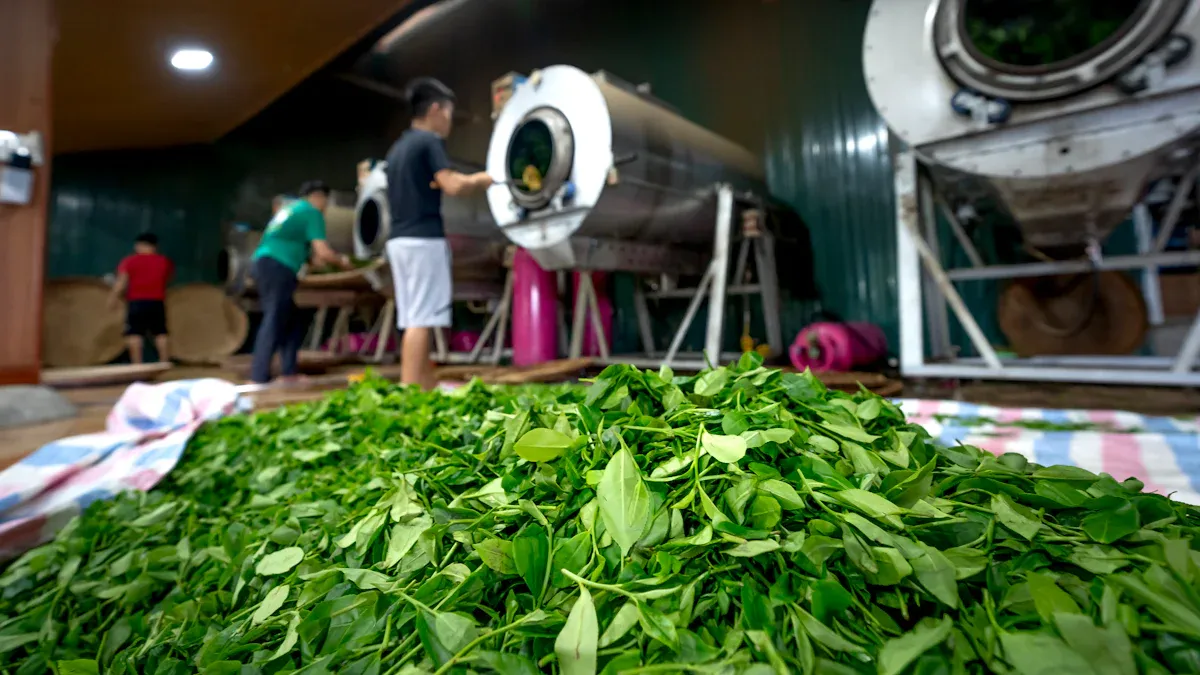
When evaluating sorting methods, production speed is a primary consideration. The difference in output between automated machines and manual labor is significant. A business must analyze its volume requirements to determine the most effective approach for its operations.
Automated sorting machines provide unparalleled throughput for large-scale tea producers. These systems process vast quantities of tea leaves at a speed no human team can match. Advanced algorithms allow producers to calibrate the machines for different tea types, such as green, black, or oolong. This calibration optimizes the entire processing line for specific leaf sizes and appearances, ensuring each batch meets precise quality standards.
A Taiwanese tea company provides a compelling case study. After implementing automated sorters, the company achieved several key improvements:
It saw a 15% increase in sorting accuracy.
The change led to greater product uniformity and faster turnaround times.
This enhancement improved product differentiation and customer satisfaction.
Manual sorting operates at a fundamentally different pace. A skilled individual can sort a limited amount of tea per hour. The process is meticulous but inherently slow and labor-intensive. While this method allows for careful inspection, its capacity is restricted by the number of workers and their level of endurance. Expanding production requires hiring and training more staff, which introduces variability and complexity. For businesses aiming for high-volume output, manual sorting presents a clear bottleneck that limits overall efficiency.
A producer's financial strategy heavily influences the choice between automated and manual sorting. The decision represents a classic trade-off between a high upfront capital expenditure (CapEx) for machinery and sustained, long-term operational expenses (OpEx) for labor. A thorough cost analysis reveals the total financial impact of each approach over time.
Adopting automation requires a significant initial investment. A commercial-grade flavored tea sorting machine is a major capital asset. The price for these machines can vary widely, often ranging from $50,000 to over $250,000 depending on their capacity, features, and technological sophistication.
However, the purchase price is only one part of the total upfront cost. Businesses must also budget for several other essential expenses:
Installation and Setup: Professional installation ensures the machine is calibrated correctly and integrated into the existing production line.
Software and Integration: Advanced sorters require software that may need to be integrated with a company's existing management systems.
Staff Training: Employees need training to operate, monitor, and maintain the new equipment effectively.
Note: A successful business case for automation hinges on calculating the Return on Investment (ROI). A producer should project long-term labor savings against the total initial cost. This calculation determines the time it will take for the machine to pay for itself and start generating profit.
Manual sorting presents a low barrier to entry with minimal initial investment. The primary cost is ongoing labor. This operational expense can become substantial and unpredictable as a business grows. Labor costs extend far beyond hourly wages.
The true cost of a manual sorting team includes multiple factors that accumulate over time.
| Cost Component | Description | Financial Impact |
|---|---|---|
| Wages & Salaries | Direct compensation paid to sorting staff. | The largest and most direct recurring expense. |
| Benefits & Taxes | Includes healthcare, retirement plans, and payroll taxes. | Can add 20-30% on top of base wages. |
| Training & Onboarding | Costs associated with training new hires on quality standards. | A recurring cost due to employee turnover. |
| Management Overhead | Time and resources spent supervising the sorting team. | An indirect cost that grows with team size. |
📈 The Scalability Challenge: With manual sorting, every increase in production volume directly translates to a proportional increase in labor costs. A company that doubles its output must nearly double its sorting staff, leading to linear and often unsustainable expense growth. This model limits a company's ability to improve profit margins as it scales.
Quality control is the cornerstone of a reputable tea brand. The sorting process directly impacts the final product's taste, aroma, and appearance. Producers must decide between the nuanced judgment of the human eye and the unwavering reliability of a machine. Each method offers a different path to achieving a high-quality product.
Manual sorting provides a level of precision that technology has yet to fully replicate. Human sorters engage multiple senses to perform a holistic quality assessment. They can see subtle imperfections, feel the texture of a leaf, and even smell for signs of improper drying or storage. This qualitative approach is invaluable for producing premium and artisanal teas.
A skilled sorter can identify and remove defects that a machine might miss:
Slightly bruised or broken leaves that could release excess tannins.
Minor color variations indicating inconsistent oxidation.
Imperfectly shaped inclusions, such as flower petals or fruit pieces, that detract from the visual appeal.
Foreign matter that is similar in size and color to the tea leaves.
This hands-on method allows a producer to create a product with exceptional character and purity. For boutique brands, the story of "hand-sorted" tea is a powerful marketing tool that justifies a higher price point. The human touch ensures that every single leaf meets an exacting, artisanal standard.
Automated sorting machines deliver unparalleled consistency across massive production volumes. These systems eliminate the variables of human fatigue, subjectivity, and error. A machine applies the same objective rules to the first leaf of the day and the last, ensuring absolute product uniformity.
⚙️ Modern sorters use advanced optical technology, including high-resolution cameras and infrared sensors, to analyze each particle. They operate based on pre-programmed parameters.
| Parameter | Machine's Role | Benefit for Quality Control |
|---|---|---|
| Color | Identifies and ejects leaves that are too dark (over-oxidized) or too light (under-oxidized). | Guarantees a uniform appearance and consistent flavor profile in every package. |
| Size & Shape | Sorts leaves into specific grades (e.g., whole leaf, broken, fannings) with high accuracy. | Ensures the tea brews correctly and meets specific product specifications. |
| Density | Removes foreign objects like small stones or twigs that may have a similar color but different density. | Improves product safety and purity. |
This data-driven approach guarantees that every box of tea a customer buys is identical to the last. For large-scale commercial operations, this level of consistency is not just a goal; it is a fundamental requirement for maintaining brand trust and market position. Automation transforms quality control from a subjective art into a repeatable science.
A company's growth trajectory is directly tied to its operational capacity. The choice between automation and manual labor defines how effectively a business can scale to meet rising demand and enter new markets.
Automation provides a clear and powerful path for business expansion. An automated sorting machine allows a producer to increase output without a proportional increase in labor. This capability is essential for companies aiming to compete in larger markets. Advanced sorting robots offer several key advantages for growth:
They help producers meet the strict quality standards required for large-scale domestic and international distribution.
They improve efficiency, traceability, and cost-effectiveness, which are vital for a competitive edge.
High-precision sorting enables product differentiation, allowing companies to capture a larger share of the premium and specialty tea markets.
Modular and user-friendly solutions make automation accessible, enhancing productivity for a wider range of producers.
Ultimately, automation removes the operational ceiling, enabling a business to pursue aggressive growth strategies with confidence.
Manual sorting presents significant challenges to rapid business growth. This method creates a direct link between production volume and labor costs. To double output, a company must nearly double its sorting staff. This linear model introduces several limitations.
The Linear Growth Trap: As production increases, so do expenses for wages, training, and management. This model makes it difficult to achieve economies of scale, where higher volume leads to lower per-unit costs.
This dependency on labor can slow a company's response to market opportunities. The time required to hire, train, and manage new teams becomes a bottleneck. It restricts a producer's agility and can make large-scale expansion financially unsustainable.
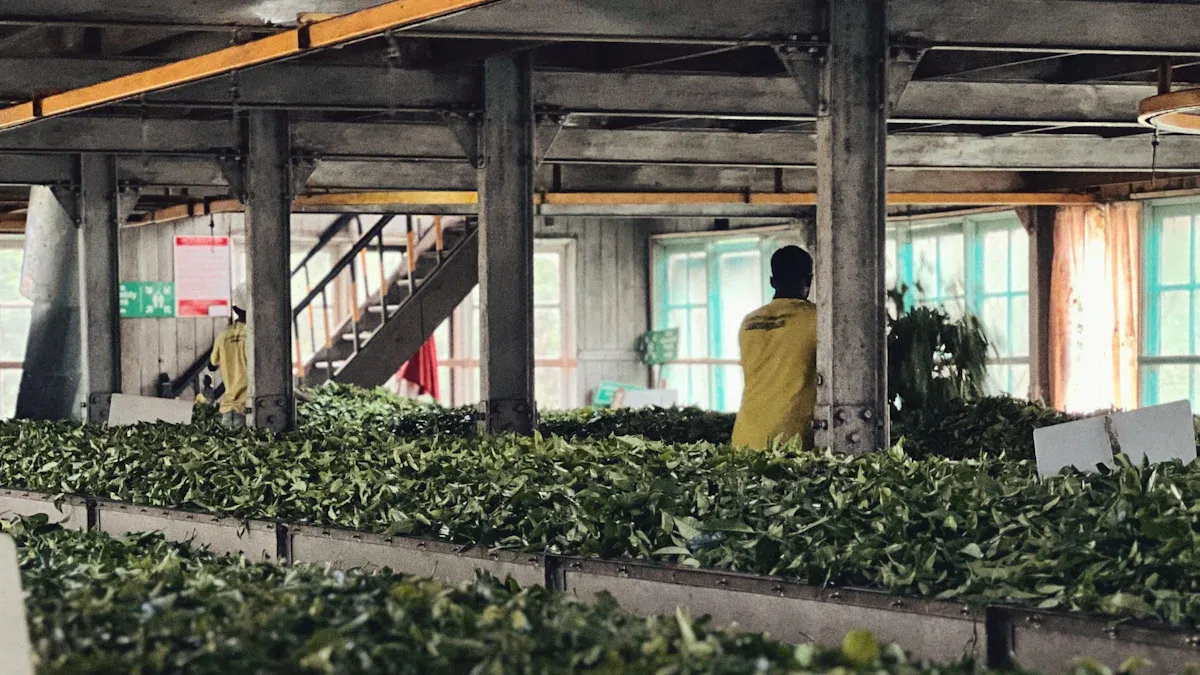
Selecting the ideal flavored tea sorting machine requires a careful evaluation of both technology and business requirements. Producers must match advanced features with their specific production goals to ensure a wise investment.
Modern sorting machines offer sophisticated technology for superior accuracy. Producers should look for systems with advanced imaging capabilities.
AI-Powered Vision: Artificial intelligence drives high sorting accuracy. AI algorithms, combined with multi-view imaging, give a nearly 360° view of each particle, detecting micro-defects efficiently.
Multi-Spectral Cameras: Advanced cameras using NIR (Near-Infrared) and InGaAs technology scan beyond the visible spectrum. This allows a flavored tea sorting machine to identify materials by their chemical composition, not just their color.
Gentle Handling Mechanisms: For delicate inclusions like rose petals or dried fruit, a belt-type sorting mechanism is crucial. This design minimizes damage to fragile ingredients, preserving the product's visual appeal and quality.
A producer must analyze its operational scale before choosing a flavored tea sorting machine. The right equipment depends on production volume, contamination levels, and desired purity. Small-batch producers might consider a machine with a capacity of 40-80 kg/h, while larger operations need much higher throughput.
Before investing, a company should answer several key questions:
What is our current daily or hourly production volume?
What level of purity does our brand promise require?
How much product are we losing to waste with our current method?
Answering these questions helps define the need. An optical sorter increases product value by removing contaminants and discolored leaves. This leads to higher purity, reduced waste, and a final product that commands better market prices.
Some producers find the ideal solution lies between full automation and purely manual labor. A hybrid model strategically combines machine efficiency with human expertise. This integrated approach allows a business to leverage the strengths of both methods, creating a powerful and flexible sorting system. It offers a practical path for balancing speed, cost, and quality.
In a hybrid system, each component performs the task it does best. The process creates a highly efficient workflow that maximizes quality without sacrificing speed. Automated machines handle the initial, high-volume sorting. They rapidly remove common defects and separate tea leaves by grade. This step does the heavy lifting.
💡 A Typical Hybrid Workflow:
Initial Machine Sort: An optical sorter processes the bulk tea, removing foreign matter and major imperfections.
Final Manual Polish: A team of skilled sorters inspects the machine-sorted tea, removing subtle defects and ensuring delicate inclusions are perfect.
This division of labor allows the manual team to focus its attention on nuanced quality control rather than bulk processing.
A hybrid model is not for everyone, but it provides a significant advantage in certain situations. It is particularly effective for businesses navigating the transition from small-scale to large-scale production.
This approach makes sense for producers who:
Handle high-value specialty teas: Companies producing teas with delicate, expensive ingredients like whole flower blossoms or large fruit pieces can use machines for the base tea and manual sorting for the fragile inclusions.
Are scaling up operations: A growing business can invest in an initial sorter to handle increased volume while retaining a manual team to uphold its artisanal quality promise.
Require near-perfect purity: For markets with zero tolerance for defects, a final human inspection after machine sorting provides the ultimate quality assurance.
This model offers a scalable solution that protects brand reputation and product integrity.
Large-scale operations find a flavored tea sorting machine a necessary investment for efficiency. Boutique producers, however, justify manual sorting with rising consumer demand for premium, artisanal teas. A hybrid model, combining machine speed with a final manual check, offers a practical balance between precision and large-scale production.
Most machines require daily cleaning and weekly inspections. Following the manufacturer's schedule prevents downtime. This practice ensures the machine's longevity and consistent performance.
Yes, modern sorters are highly versatile. Producers calibrate settings for different leaf sizes, colors, and ingredients. This flexibility allows one machine to handle diverse product lines effectively.
The return on investment depends on production volume and labor savings. Many businesses see a full return within 18 to 36 months. Increased purity also boosts profitability.

We provide you with comprehensive foreign trade solutions to help enterprises achieve global development
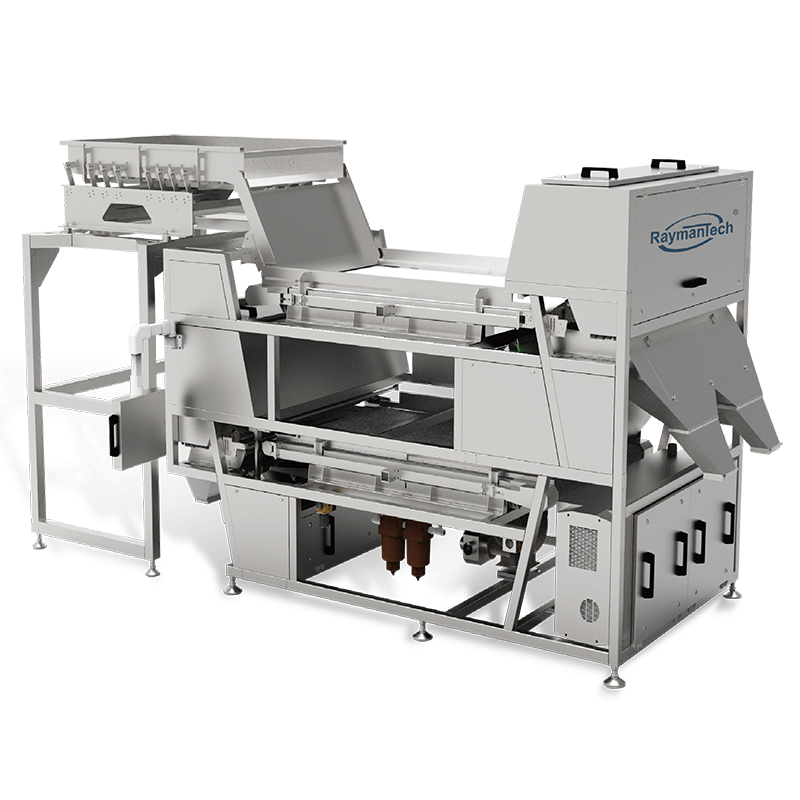
Recommedation: Chili, walnut, peanuts, soybeans, c...
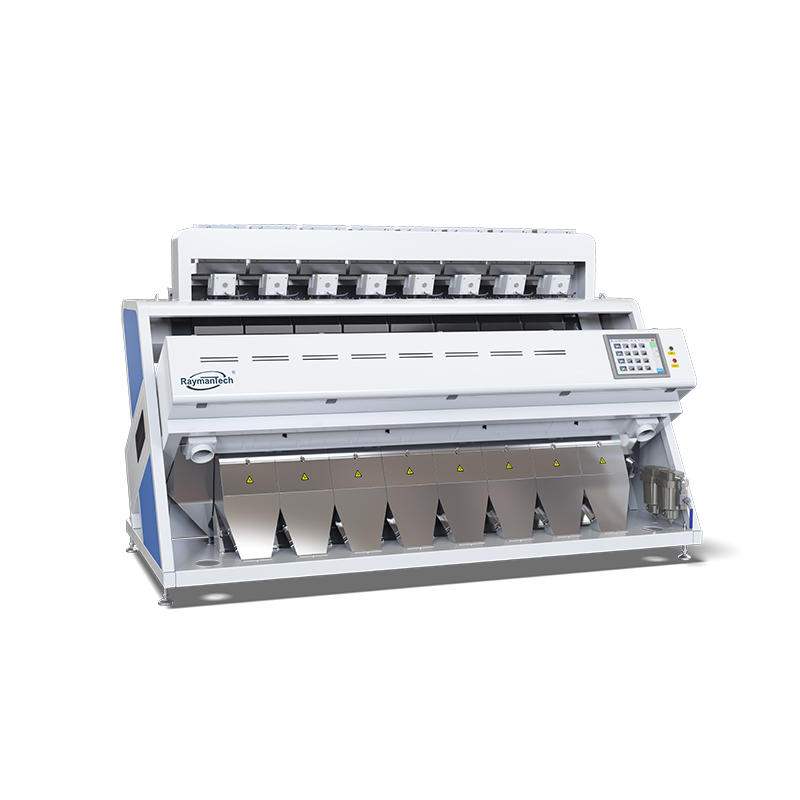
Recommedation: Rice, wheat, corn, grain, pulses, s...
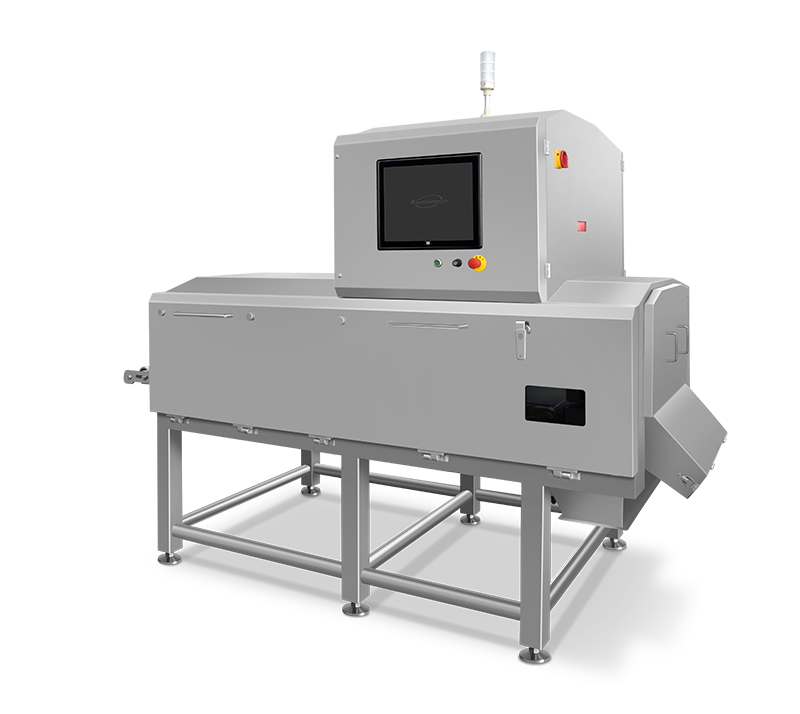
Conventional and unconventional contaminant detect...
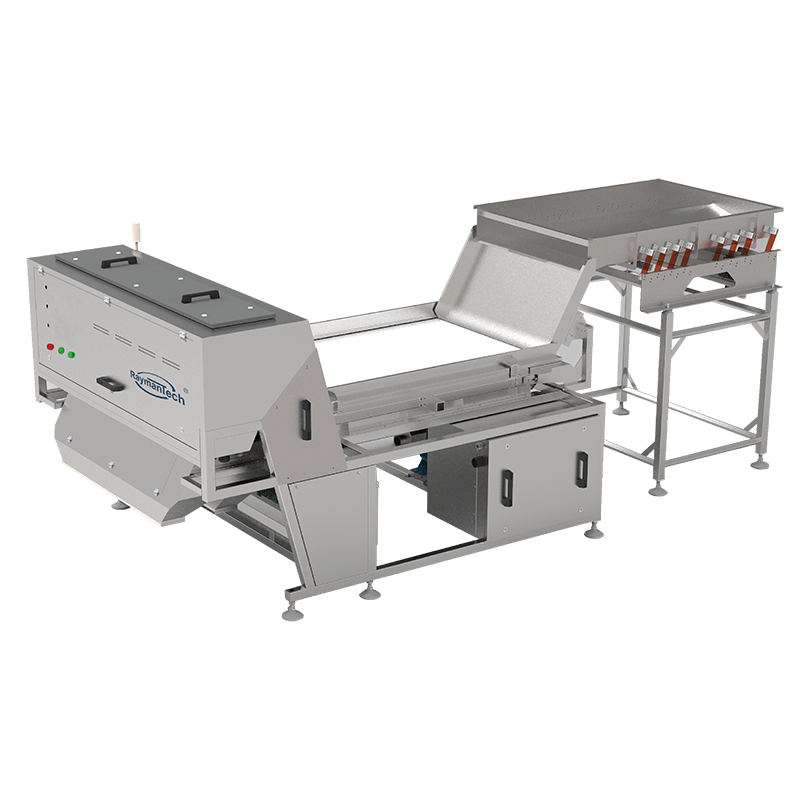
Recommedation: Chili, walnut, peanuts, soybeans, c...
Select the most popular foreign trade service products to meet your diverse needs
Select the most popular foreign trade service products to meet your diverse needs








User Comments
Service Experience Sharing from Real Customers
James Wilson
Production SupervisorThis flavored tea sorting machine has revolutionized our production line. The accuracy in separating different tea blends is remarkable, and it handles high volumes without compromising quality. A game-changer for any tea processing facility.
Sarah Chen
Quality Control ManagerHighly efficient machine with excellent sorting precision for various flavored teas. Reduced our manual sorting time by 70%. The interface is user-friendly, though initial setup required some technical support. Overall, a great investment.
Michael Rodriguez
Plant ManagerOutstanding performance in sorting flavored teas with different leaf sizes and additives. The machine's adaptive sensors accurately distinguish between tea grades while maintaining hygiene standards. Minimal maintenance required since installation.
Emily Watson
Operations DirectorThis sorting machine has significantly improved our tea blending consistency. It perfectly identifies and separates flavored tea components with 99% accuracy. The automated cleaning system saves us considerable downtime between batches.