 English EN
 中国 CN
中国 CN
.png)
RaymanTech Whole-Chain Solution: A Deep Dive
Food safety and quality control demands have evolv...
More

Large-scale operations prioritize high accuracy and speed. They find optical sorters to be the superior choice despite a higher initial investment. Smaller businesses or those with budget constraints often select a mechanical broccoli sorting machine. This equipment provides a reliable solution for basic size and weight sorting needs.

Understanding the core technology of each sorter is crucial for making an informed decision. Mechanical and optical systems approach the task of sorting broccoli from fundamentally different perspectives. One relies on physical properties, while the other uses advanced digital analysis.
Mechanical sorters operate on the principles of physics to separate broccoli by size and weight. These machines use physical mechanisms to grade the product.
A common design is a vibrating grading machine. It uses multi-level screens with different gap sizes. Vibration and the broccoli's own weight cause smaller pieces to fall through the appropriate levels.
Other systems, like those with a spiral drive design, offer a gentler approach. All rollers remain at the same level. They transport florets forward, sorting them accurately without lifting and dropping the delicate product.
This type of broccoli sorting machine provides a straightforward and effective method for basic physical grading.
Optical sorters use advanced imaging technology to analyze each piece of broccoli. They identify not just size and shape but also color, texture, and biological characteristics. These systems combine powerful hardware with intelligent software.
Inside the Tech: High-resolution cameras (color and infrared) and specialized lasers work together. Laser systems can even detect chlorophyll levels, identifying the freshness of the broccoli.
The real power comes from artificial intelligence (AI). Software uses deep learning algorithms, trained on millions of images, to distinguish good products from defective ones. The AI recognizes patterns and identifies issues like discoloration or blemishes with incredible precision, far surpassing manual inspection capabilities.

Accuracy is a critical factor in sorting, but its definition changes dramatically between mechanical and optical systems. One machine offers reliable physical consistency, while the other provides comprehensive quality assurance. A business must decide which level of precision best serves its operational goals and brand promise.
Mechanical sorters deliver high accuracy for their specific, limited task: sorting broccoli by physical dimensions. These machines consistently separate florets based on size and weight, which is essential for packaging and processing applications that require uniform pieces. Their performance is reliable for producers who grade their product primarily on physical attributes.
However, the accuracy of a mechanical sorter ends there. It cannot assess the quality of the broccoli itself.
What it can do: Accurately separate florets into different size categories (e.g., small, medium, large).
What it cannot do: Detect yellowing, brown spots, insect damage, or foreign materials mixed in with the product.
A mechanical sorter will classify a discolored, low-quality floret and a perfect, green floret into the same batch if they share the same size. This limitation makes them unsuitable for operations where premium quality and defect removal are top priorities.
Optical sorters provide unmatched accuracy in total quality control. These systems move beyond simple sizing to perform a detailed analysis of each floret. Using cameras, lasers, and AI, they capture granular data on color, shape, and even biological composition. This technology allows them to identify and eject products that fail to meet precise quality standards.
Food Safety First: Optical sorters are champions of food safety. They can spot and remove dangerous foreign materials like plastic, glass, or wood, protecting consumers and the producer's reputation.
The system's AI can be trained to recognize a vast library of potential issues, ensuring a level of inspection that is impossible to achieve with manual labor or mechanical means. The precision is surgical. The machine can eject a single bad floret from a high-speed line without disrupting the flow.
Here is a direct comparison of their detection capabilities:
| Defect Type | Mechanical Sorter | Optical Sorter |
|---|---|---|
| Incorrect Size/Weight | ✅ | ✅ |
| Discoloration (Yellowing) | ❌ | ✅ |
| Blemishes & Rot | ❌ | ✅ |
| Pests or Insect Damage | ❌ | ✅ |
| Foreign Material (e.g., plastic) | ❌ | ✅ |
| Freshness (Chlorophyll Level) | ❌ | ✅ |
This level of precision defect detection ensures that only the highest quality broccoli reaches the final package. It empowers businesses to build a brand synonymous with excellence and consistency.
Processing speed directly impacts profitability and a business's ability to meet market demand. The operational tempo of a mechanical sorter differs significantly from that of an optical sorter. One is designed for a consistent, manageable pace, while the other is engineered for maximum velocity and volume.
Mechanical sorters operate at a pace well-suited for small to medium-sized farms and processing facilities. Their throughput is consistent and reliable for operations that do not handle massive daily harvests. These machines process a steady volume, allowing producers to meet regular order fulfillment without the complexity of a high-speed system.
Their capacity is measured in hundreds, not thousands, of kilograms per hour. A typical model for a medium-sized operation demonstrates this scale.
| Model | Type | Capacity |
|---|---|---|
| Broccoli Sorting Machine | Sorter | 500kg/H |
This processing rate is more than adequate for businesses supplying local markets or specialized retailers. It provides an efficient workflow for a moderate scale.
Optical sorters are built for speed and scale. These systems are the engines of large-scale food processing, capable of handling immense volumes of broccoli at incredible speeds. They process multiple tons of product per hour, a rate that mechanical systems cannot approach. This high throughput is essential for producers supplying major supermarket chains and international markets.
Speed Without Sacrifice: A key advantage of optical sorters is their ability to maintain extreme accuracy even at top speeds. The AI-powered system analyzes and ejects defective products in milliseconds.
This capability allows businesses to scale up production dramatically. They can process entire truckloads of raw product in a fraction of the time, increasing overall plant efficiency and maximizing output to meet the demands of a global supply chain. 🚀
The financial commitment is often the most decisive factor in any equipment purchase. A business must evaluate not only the initial price tag but also the long-term financial impact. The choice between a mechanical and an optical sorter presents a classic scenario: a lower upfront cost versus a strategic investment with a higher return over time.
Mechanical sorters have a significantly lower purchase price. Their simpler engineering and less complex technology make them more accessible for businesses with limited capital. This lower barrier to entry is their primary financial advantage.
For a small farm or a new processing startup, a mechanical sorter represents a practical and affordable step into automation. It allows the business to improve efficiency over manual sorting without requiring a massive capital expenditure. The maintenance and operational costs are also generally lower due to the absence of sophisticated software and sensitive electronic components.
Key financial considerations for a mechanical sorter include:
Lower initial investment: Frees up capital for other business needs.
Predictable maintenance: Fewer complex parts mean simpler and often cheaper repairs.
Immediate efficiency gain: Provides a clear improvement over purely manual processes.
However, the lower cost comes with a trade-off. The machine's value is tied directly to its function of basic sizing. It does not add value through advanced quality control, brand protection, or significant labor reduction in the quality inspection phase.
Optical sorters command a higher initial investment. The advanced cameras, lasers, and AI software represent a significant technological leap, and the price reflects that. While some entry-level optical sorters can be found for under $1,000, high-end systems designed for the precision required in vegetable processing range from $9,500 to $26,000. A specialized optical CCD color sorter for broccoli often falls within the $19,000-$26,000 range.
This initial expense, however, is better understood as a strategic investment that delivers a powerful return on investment (ROI). Businesses should analyze the machine's potential to increase efficiency and generate savings. The long-term financial gains often far outweigh the initial cost.
Calculating the ROI: A business can justify the cost of an optical sorter by calculating savings from reduced labor, decreased food waste, and increased throughput. This calculation reveals the machine's true value over its operational lifespan. 💰
Automated sorting systems generate these returns in several key ways:
Drastic Labor Reduction: These machines operate continuously and accurately, performing inspection tasks that would otherwise require multiple human workers. By automating the sorting process, businesses significantly cut labor costs, including wages and overhead. This strategy is already in play in other industries. For example, waste management giant WM plans to use optical technology to reduce its dependency on 5,000 to 7,000 manual sorting jobs in a tight labor market.
Improved Accuracy and Less Waste: Superior accuracy directly lowers material expenses. The system ensures that defective products do not enter the supply chain, preventing costly recalls and protecting brand reputation. Furthermore, it prevents human error from accidentally discarding good products, reducing overall food waste.
Maximized Throughput: The ability to run continuously at high speeds allows a business to process more product in less time, increasing overall revenue potential and enabling the company to take on larger contracts.
Investing in an optical sorter is a move toward long-term profitability and market leadership. It transforms a major operational cost—manual labor for quality control—into a streamlined, automated process that pays for itself over time.
An informed decision requires a clear understanding of each machine's core philosophy. One prioritizes simplicity and reliability for fundamental tasks. The other leverages complex technology for comprehensive quality control and future-proofing. Your choice of a broccoli sorting machine depends on your operational needs, technical capabilities, and long-term business strategy.
Mechanical sorters are defined by their straightforward design. These machines rely on physical principles, making them easy to operate and maintain. Facility staff with general mechanical knowledge can typically handle routine service and repairs without needing specialized training in software or electronics.
Key Advantage: The simplicity of a mechanical broccoli sorting machine translates to reliability and lower maintenance overhead. There are no complex sensors to calibrate or software to update.
This simplicity makes them an excellent choice for operations seeking to automate basic sizing without introducing significant technical complexity. They are workhorses, built for a specific job and performing it consistently. The focus is on durable, predictable mechanics rather than advanced digital processing.
Optical sorters represent the cutting edge of food processing technology. These systems are not static; they evolve through software updates that continuously enhance their capabilities. This advanced technology future-proofs the investment.
Software updates improve performance by processing sensor data in real-time, allowing the machine to classify items with incredible accuracy. These updates introduce new features and learning algorithms, increasing the system's ability to spot subtle defects and foreign materials. Key advancements include:
Continuous Learning: Machine learning algorithms adapt to new product variations and potential contaminants, ensuring ongoing performance improvements.
Remote Management: Technicians can monitor performance, adjust parameters, and update reference libraries from anywhere, aligning with Industry 4.0 standards.
Automated Calibration: Modern systems use internal routines to self-calibrate, compensating for environmental changes and ensuring consistent performance without manual intervention.
This evolving intelligence makes an optical broccoli sorting machine a dynamic asset. It adapts to changing market demands and quality standards, ensuring a business remains competitive.
A business's final choice rests on its priorities. Mechanical sorters provide an affordable solution for basic sorting in smaller operations. Large-scale producers aiming for market leadership select an optical broccoli sorting machine for its superior quality control and efficiency.
Case studies show this advanced technology can increase yield by 25% in processing facilities by ensuring quality and uniformity.
This side-by-side comparison helps businesses select the right equipment for their specific needs.
No. Mechanical sorters are limited to physical sizing. Adding quality detection like color analysis requires replacing the unit with an optical sorter.
One optical sorter can replace several manual inspectors. It automates quality control, reduces human error, and allows businesses to reallocate staff to higher-value tasks.
Mechanical sorters need minimal training. Optical sorters require more, but suppliers provide comprehensive instruction on software operation and maintenance to ensure peak performance.

We provide you with comprehensive foreign trade solutions to help enterprises achieve global development
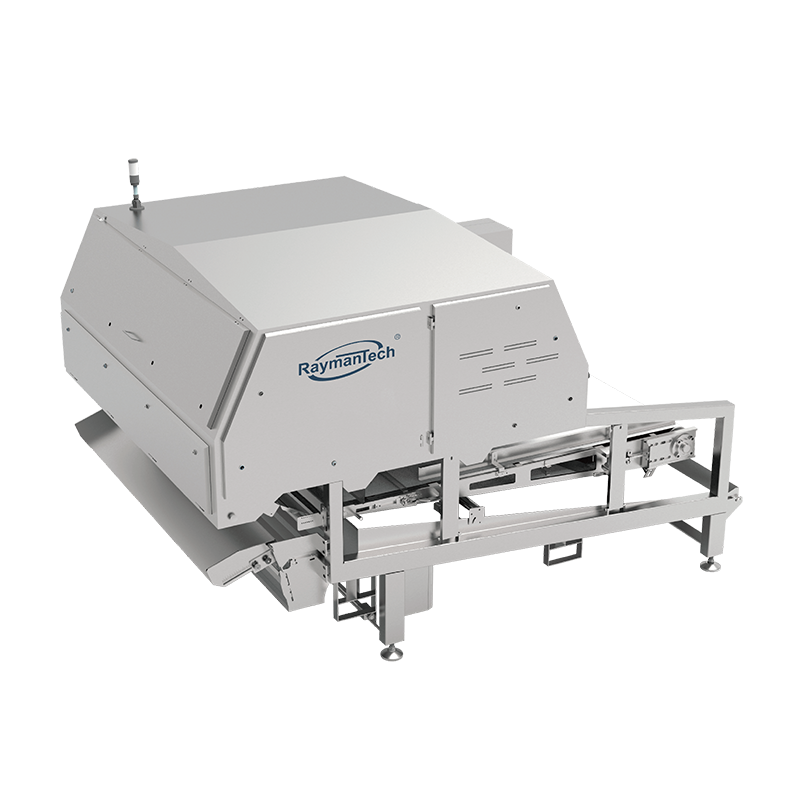
Recommedation: Frozen vegetables such as green be...
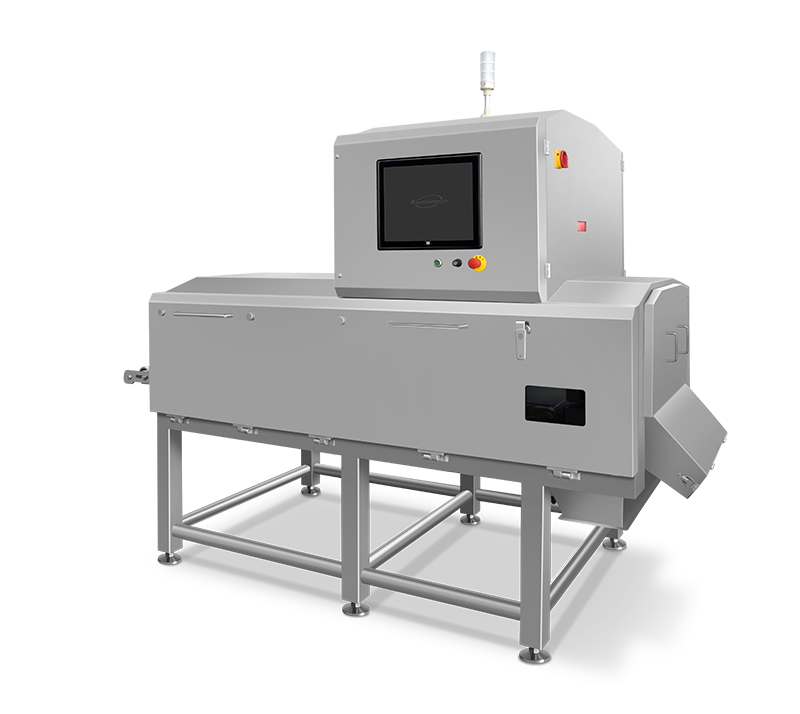
Conventional and unconventional contaminant detect...
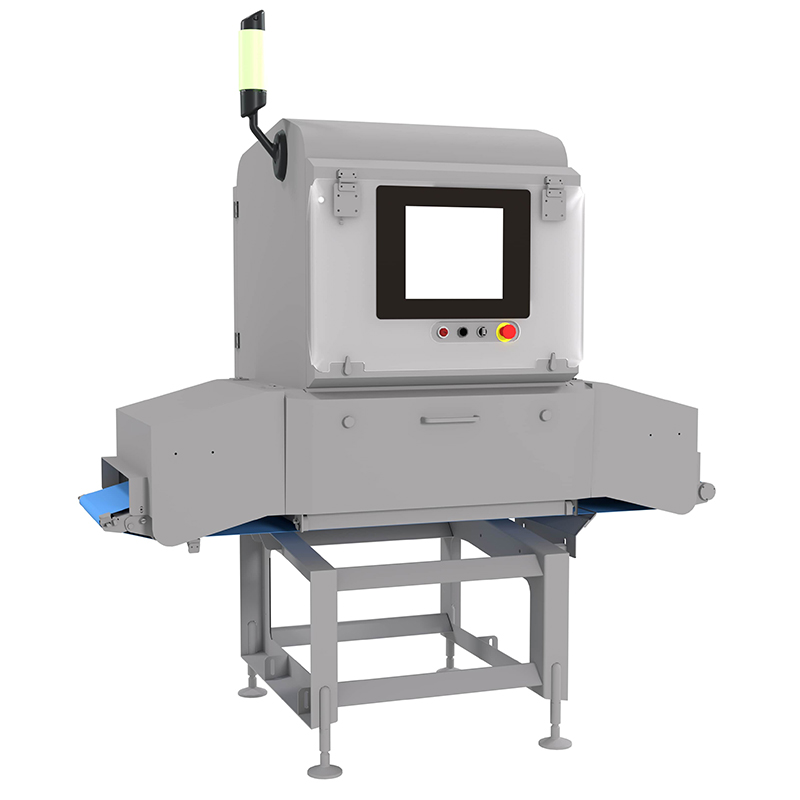
Chicken bone inspection, global poultry AI databas...

UHD X-Ray detector, AI large model, all food indus...
Select the most popular foreign trade service products to meet your diverse needs
Select the most popular foreign trade service products to meet your diverse needs







User Comments
Service Experience Sharing from Real Customers
Michael Rodriguez
Farm Operations ManagerThis broccoli sorting machine has revolutionized our packing line. The accuracy in size grading is remarkable, and we've reduced manual labor by 60%. The machine handles 2 tons per hour with minimal waste.
Sarah Chen
Quality Control SupervisorImpressive sorting precision and consistent performance. The optical sensors perfectly distinguish broccoli heads by color and size. Minor maintenance required but overall excellent value for money.
David Thompson
Production Line ManagerAfter installing three of these machines, our sorting efficiency increased by 300%. The automated system reduced human error and improved our product quality significantly. Highly recommended for vegetable processors.
Jennifer Williams
Agricultural EngineerReliable machine with advanced imaging technology. The customizable sorting parameters allow us to meet different client specifications. The customer support team is responsive and helpful when needed.