 English EN
 中国 CN
中国 CN
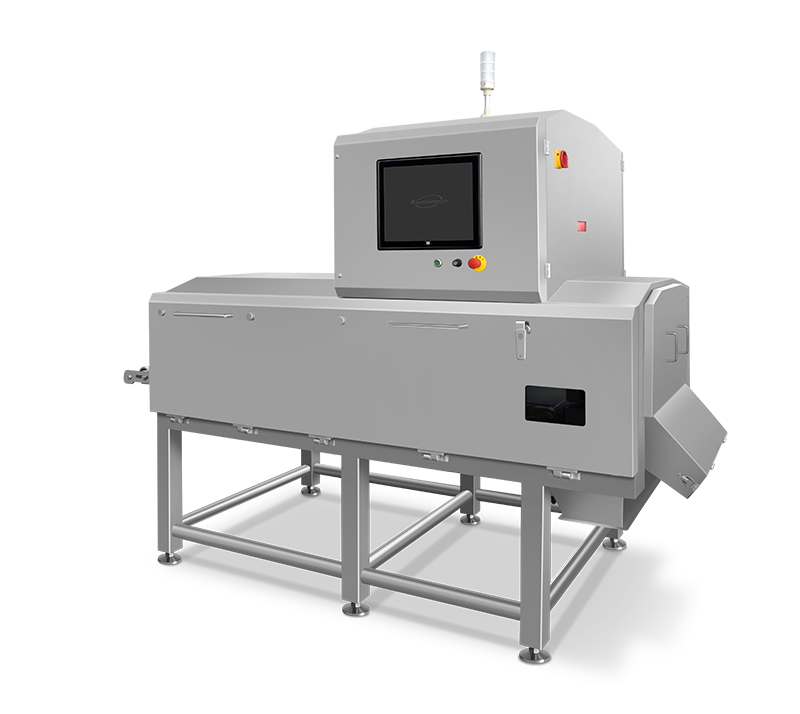
RaymanTech Whole-Chain Solution: A Deep Dive
Food safety and quality control demands have evolv...
More

A modern peas sorting machine ensures product integrity with remarkable efficiency. It scans every pea using high-resolution cameras as it falls down a chute. An onboard computer instantly analyzes the images, identifying defects. A precise puff of compressed air then removes any imperfect pea or foreign object into a reject bin.
Real-World Impact: In March 2025, a major recall involved over 197,000 cans of green beans due to foreign object contamination concerns. This event underscores the critical need for advanced sorting technology in food processing.
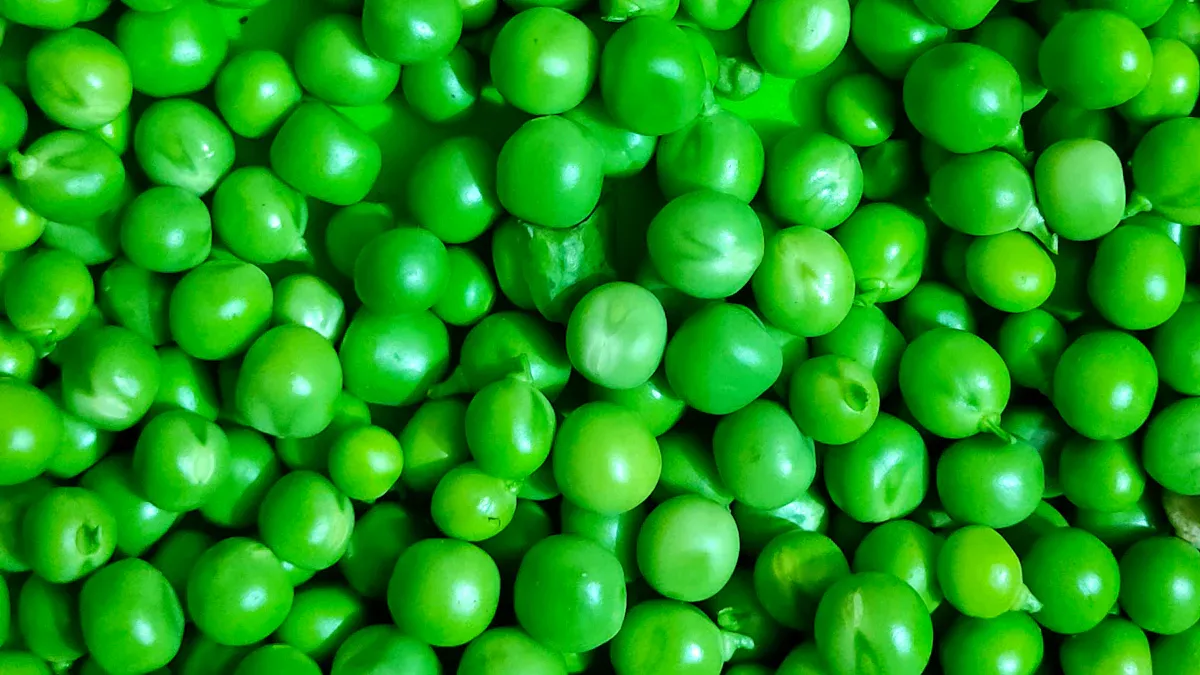
A modern peas sorting machine executes a sophisticated, five-step process with incredible speed and precision. Each step is critical for ensuring that only the highest quality peas make it to the final product. Let's break down how this technology works.
The process begins with bulk loading. A large quantity of peas enters the machine's hopper. From there, the system must arrange them into a single, uniform layer for effective scanning. It accomplishes this using specialized mechanisms like a vibratory bowl feeder. This device uses controlled vibrations to move the peas up a helical track built into the bowl's wall. As the peas ascend, they naturally form a single-file line. Any clumps or improperly oriented items are gently deflected back into the bowl's center, ensuring a continuous, monolayer stream of individual peas moves toward the inspection zone.
As the peas free-fall or slide down a chute in a single layer, they pass through an inspection zone. Here, an array of high-technology cameras captures multiple images of every single pea from different angles. These are not standard cameras; they are advanced imaging systems designed for industrial speed and precision.
Tech Spotlight: Advanced Imaging 📸 A peas sorting machine may use several types of cameras to detect a wide range of defects:
Full-Color RGB Cameras: Identify discoloration, blemishes, and color variations.
Near-Infrared (NIR) & Short-Wave Infrared (SWIR) Cameras: Detect defects invisible to the human eye, such as moisture content differences or subtle decay.
High-Resolution CCD Cameras: Some systems use Japanese high-end 5670-pixel CCD chips capable of identifying spots as small as 0.04mm.
This multi-sensor approach provides a comprehensive view of each pea, ensuring no defect goes unnoticed.
The captured images are sent to an onboard computer for immediate processing. This is where intelligent software and artificial intelligence (AI) come into play. The software analyzes each image against pre-programmed quality parameters for color, size, and shape.
For color, it often uses the CIELab color space, which mimics human perception of color differences. For shape, advanced 'PROfile technology' can analyze an object's geometry to identify broken, oversized, or undersized peas. The system can even model a pea as an ellipsoid to calculate its volume and dimensions with high precision. This AI-driven analysis achieves remarkable accuracy, often exceeding 99% in identifying defects.
| Model Type | Typical Accuracy |
|---|---|
| Faster R-CNN | >99% |
| YOLOv8 | >98% (mAP) |
| CNN (with noise) | ~99% |
| Automated Models | ~93.5% |
Once the software identifies a defective pea or a foreign object, it calculates the item's exact position and trajectory. It then sends a signal to a bank of high-speed pneumatic ejectors, or air jets. In less than 10 milliseconds, the designated ejector fires a precise and powerful puff of compressed air. This puff strikes the unwanted item, knocking it out of the main product stream and into a reject chute. The system's precision is crucial; a reduced distance between detection and rejection, combined with high-speed air valves, ensures that only the target is removed, minimizing the accidental loss of good product.
The process concludes with two distinct streams of product. The main stream consists of high-quality peas that have passed inspection. These "accepted" peas continue down the primary chute and are collected for packaging. The rejected items—discolored peas, stones, twigs, or broken pieces—are diverted into a separate reject bin. Modern sorting systems provide real-time analytics on this process. Operators can monitor the ratio of accepted to rejected products, review performance reports, and even analyze images of rejected items to fine-tune the sorting criteria, ensuring optimal efficiency and product quality.
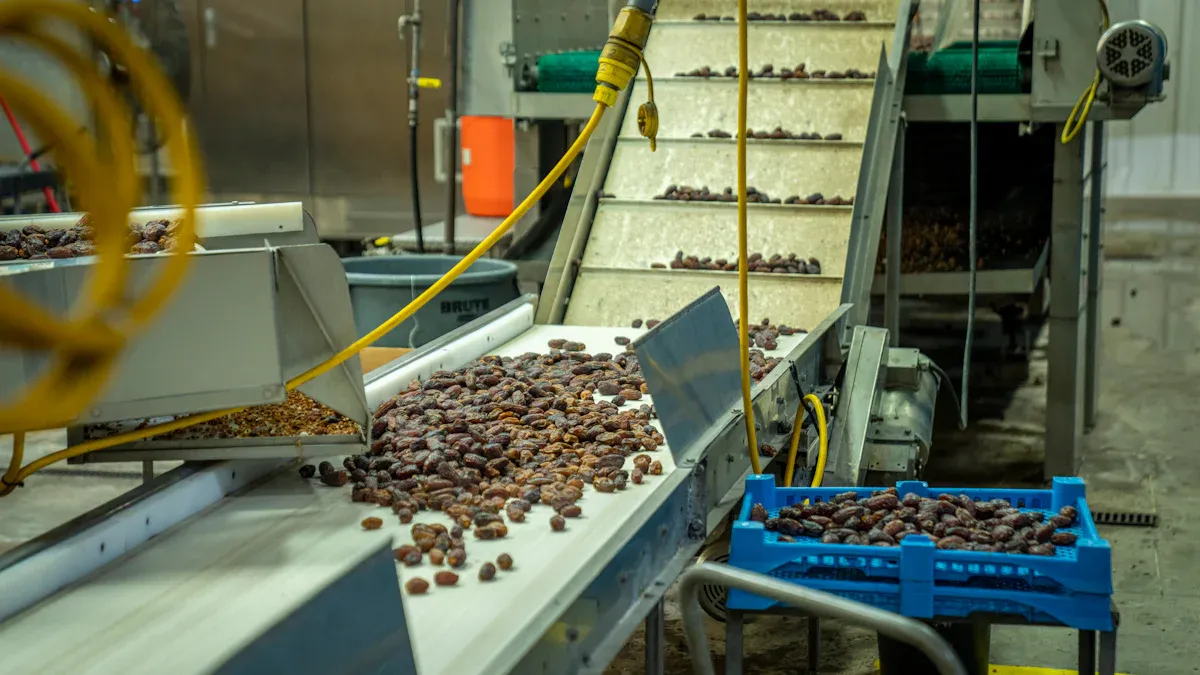
An optical sorter's effectiveness hinges on the seamless integration of three core technologies. These systems work in concert to achieve the speed and precision required for modern food processing. Leading manufacturers like Bühler AG, Tomra Systems ASA, and Satake Corporation continuously innovate in these areas to push the boundaries of sorting efficiency.
The "eyes" of a peas sorting machine are its advanced imaging systems. These are far more sophisticated than standard cameras. Many systems fuse data from both full-color RGB cameras and hyperspectral imaging sensors. While RGB cameras excel at identifying visible color defects, hyperspectral imaging captures spectral changes linked to plant physiology. This allows the machine to detect issues invisible to the human eye, such as subtle decay or moisture variations, significantly boosting the accuracy of defect recognition. This multi-sensor approach provides a complete digital picture of each pea, ensuring comprehensive inspection.
The "brain" of the operation is its intelligent software, powered by artificial intelligence. This software processes the vast amount of image data in real-time. It uses complex algorithms and machine learning models to analyze each pea against predefined quality standards for size, shape, and color. Companies like GROTECH develop sorters with software designed to separate shells and remove foreign materials with high precision. The AI can learn and adapt, improving its sorting accuracy over time. This digital intelligence allows the system to make millions of decisions per minute, a task impossible for human inspectors.
The "hands" of the sorter are the high-speed pneumatic ejectors. When the software identifies a defect, it signals a specific air jet to fire. These ejectors use advanced nozzle designs, often refined through Computational Fluid Dynamics (CFD) analysis, to create a focused and powerful puff of air. This precision ensures only the target is removed. Manufacturers optimize these systems to reduce compressed air consumption, a major operational cost. Furthermore, the valves controlling these jets are built for extreme durability. Some high-speed valves, like SMC's SX10 series, boast a service life of over 5 billion cycles, minimizing maintenance and downtime.
A peas sorting machine works by rapidly feeding, scanning, analyzing, and ejecting items. This automated process delivers a safer, higher-quality final product for consumers and reduces food waste. Future innovations in AI and robotics will continue to enhance sorting precision, ensuring even greater efficiency and safety in food processing.
A high-capacity machine processes several tons of peas hourly. Its exact throughput depends on the specific model and the quality of the incoming product.
The sorter identifies a wide range of imperfections. Common examples include:
Discolored or blemished peas
Incorrectly sized or broken pieces
Foreign materials like stones or twigs

We provide you with comprehensive foreign trade solutions to help enterprises achieve global development
.png)
Recommedation: Aquatic products, pet food, candy, ...
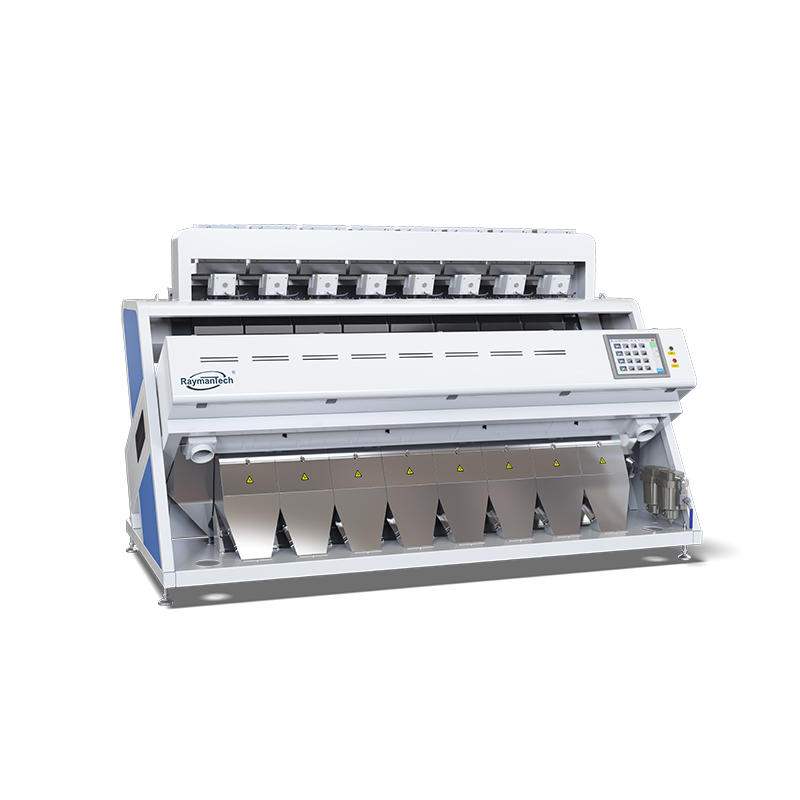
Recommedation: Rice, wheat, corn, grain, pulses, s...

UHD X-Ray detector, AI large model, all food indus...
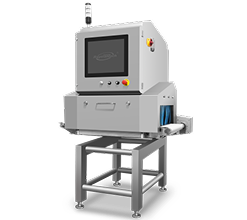
High cost performance, compact design, high sensit...
Select the most popular foreign trade service products to meet your diverse needs
Select the most popular foreign trade service products to meet your diverse needs







User Comments
Service Experience Sharing from Real Customers
Michael Rodriguez
Farm ManagerThis peas sorting machine has revolutionized our processing line. The accuracy and speed are incredible - we've increased our output by 40% while reducing manual labor costs. The color recognition technology perfectly separates damaged peas.
Sarah Chen
Food Processing SupervisorExcellent machine for our frozen pea production. The size grading is consistently accurate and the gentle handling prevents bruising. Minor learning curve for our operators, but the customer support team was very helpful during setup.
James Wilson
Production EngineerAfter testing several sorting machines, this one stands out for its reliability and low maintenance requirements. The automated cleaning system saves us hours daily. The ROI calculation shows we'll recover our investment within 8 months.
Emily Thompson
Quality Control ManagerThe precision sorting has improved our product quality significantly. We're seeing 99.7% accuracy in removing defective peas and foreign materials. The user-friendly interface makes it easy to adjust sorting parameters for different pea varieties.