 English EN
 中国 CN
中国 CN
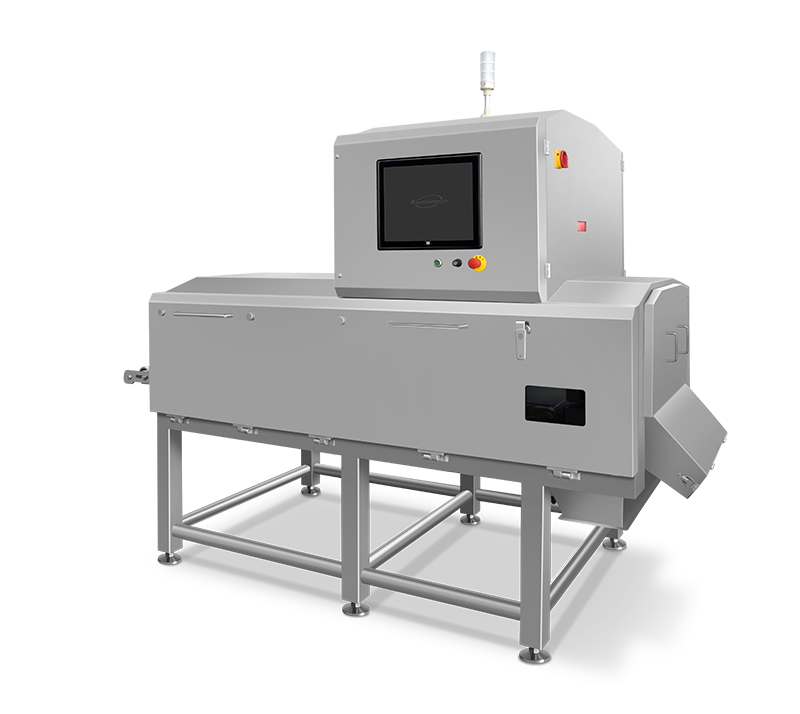

RaymanTech Bulk X-ray Inspection:The First and Most Important Line of Defense in Food Safety
In food processing, the highest-risk moment isn’t ...
More

Dual-energy X-ray technology provides superior bone detection. It analyzes a material's chemical composition, its atomic number, instead of just its density.
This capability allows advanced chicken x ray equipment to distinguish a low-density bone fragment from the surrounding food product. Single-energy systems often fail this task when densities are very similar.
Dual-energy X-ray systems achieve their remarkable precision by moving beyond the limitations of single-energy inspection. They employ a more sophisticated method that analyzes the fundamental atomic makeup of materials, allowing them to make distinctions that are impossible for older technologies.
A single-energy X-ray system measures one thing: how much of the X-ray beam a material absorbs. This absorption, or attenuation, relates directly to density. This works well for finding a dense metal screw in a less-dense food product. However, it fails when a low-density bone has a similar density to the surrounding meat. The system sees them as the same.
Dual-energy technology overcomes this by using two separate X-ray beams at different energy levels (e.g., a low-energy beam and a high-energy beam). The scientific principle at work involves how different materials react to these energy levels.
Photoelectric Effect & Compton Scatter: Materials attenuate X-rays through two main interactions: the photoelectric effect and Compton scatter. The photoelectric effect is highly dependent on a material's atomic number (Z-number).
Calculating the R-value: The system measures the absorption ratio at the low and high energy levels. This calculation, known as the R-value, provides a signature based on atomic composition, largely independent of the material's thickness. Bone, with its calcium content, has a higher atomic number than meat. It will therefore produce a different R-value, allowing the system to flag it as a contaminant.
This process enables advanced chicken x ray equipment to create a material-differentiated image, often using color to highlight contaminants like bone, glass, or metal for easy identification.
A study on tissue-equivalent materials confirmed that dual-energy methods significantly improve the accuracy of determining a material's Effective Atomic Number (EAN), achieving errors within 4%. This enhanced characterization is key to distinguishing bone from surrounding product.
The table below outlines the clear advantages of this approach.
| Feature Comparison | Single-Energy X-ray | Dual-Energy X-ray |
|---|---|---|
| Material Differentiation | Limited; struggles with similar densities. | Superior; differentiates based on atomic number. |
| Bone Fragment Detection | Ineffective for small or low-density bones. | Highly effective, even for fragments down to 1 mm. |
| Image Analysis | Grayscale image based on density. | Color-coded image based on material type. |
| False Rejects | Higher rate due to product texture/overlap. | Significantly lower rate due to precise analysis. |
Food products are rarely uniform. Poultry breasts have uneven surfaces, bags of vegetables contain overlapping items, and processed meats have varying thicknesses. These variations create "busy" images for standard X-ray systems, where changes in product thickness can be mistaken for contaminants. This leads to an unacceptably high false rejection rate.
Dual-energy technology excels in these challenging scenarios. Because it identifies materials by their atomic number, it is less affected by variations in shape, thickness, or product overlap.
Advanced algorithms in dual-energy systems analyze the data from both energy beams to filter out the "noise" from product texture. This allows the system to isolate true contaminants from the natural variations of the food product, drastically reducing false rejects.
Modern chicken x ray equipment leverages this capability to provide unparalleled safety. For example, systems like the IX-G2 series are specifically designed for inspecting products with uneven surfaces, such as raw poultry. They can reliably detect low-density contaminants like bone, shell, and rubber that a single-energy system would miss. This capability ensures that processors can maintain high throughput without sacrificing safety or incurring losses from incorrectly rejected products.
The benefits for inspecting complex products include:
Enhanced detection of low-density contaminants.
Minimal false rejects, even with overlapping or uneven items.
Improved accuracy for finding bone fragments in poultry.
Greater reliability regardless of product shape or presentation.
Ultimately, this technology provides a more intelligent and reliable inspection. The chicken x ray equipment makes its decision based on what a material is, not just how thick it appears, ensuring a safer final product.

The precision of dual-energy technology makes it invaluable across the food industry, especially where bone contamination poses a significant risk. Its ability to differentiate materials based on atomic number opens up applications that are impossible for single-energy systems.
Dual-energy inspection excels in challenging production environments. Processors use this technology for unmatched contaminant detection in both bulk and packaged goods. Ideal applications include:
Finding calcified bones in boneless raw meat like chicken breasts and legs.
Identifying bone fragments in processed foods such as chicken nuggets and sausages.
Detecting tiny, low-density pin bones in fish fillets.
Inspecting non-uniform products like bagged vegetables or shredded cheese.
The technology is highly effective for seafood inspection, where systems can identify fish bones as small as 1 mm. This advanced capability ensures that even small, hard-to-find fragments are removed. The sensitivity of modern chicken x ray equipment is impressive, as shown below.
| Bone Type | Minimum Detectable Size |
|---|---|
| Calcified bone | 1.0 mm |
| Fan bone | 2.0 mm |
| Rib bone | 2.0 mm |
| Wishbone | 2.0 mm |
Despite its advantages, processors must consider several factors before adopting dual-energy technology. The primary consideration is cost, as dual-energy systems represent a higher initial investment than their single-energy counterparts.
Operational parameters also play a crucial role. There is often a trade-off between line speed and image resolution; higher throughput may require adjustments that can impact detection sensitivity. Furthermore, product thickness directly affects performance. Thinner, more consistent product layers allow for better detection of low-density contaminants.
While regulations from bodies like the FDA do not explicitly mandate dual-energy systems, this technology provides a robust method for manufacturers to meet stringent food safety standards and ensure compliance.
Ultimately, a facility must evaluate if the superior detection capabilities of dual-energy chicken x ray equipment justify the investment and operational adjustments needed for its specific product line.
Dual-energy X-ray's ability to analyze chemical composition provides a decisive advantage in finding bones. The technology offers a more reliable inspection method by looking beyond simple density. This makes it a critical tool for ensuring quality in meat, poultry, and fish processing, helping companies meet growing consumer demand for safer food.
Dual-energy systems analyze a material's atomic number, not just its density. This allows the equipment to distinguish bone from meat even when their densities are similar.
Yes, the technology identifies various foreign materials. It detects contaminants like glass, metal, and some plastics by analyzing their unique atomic compositions, ensuring comprehensive product safety.
Regulations do not specifically mandate this technology. However, it provides a robust method for manufacturers to exceed food safety standards and ensure superior quality control.

We provide you with comprehensive foreign trade solutions to help enterprises achieve global development
.png)
Recommedation: Aquatic products, pet food, candy, ...
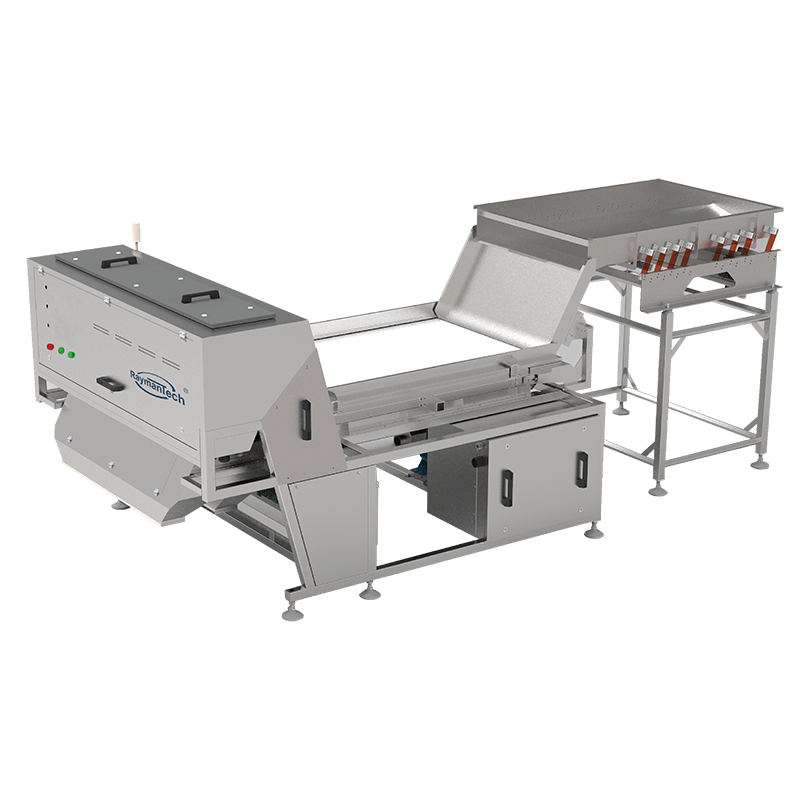
Recommedation: Chili, walnut, peanuts, soybeans, c...
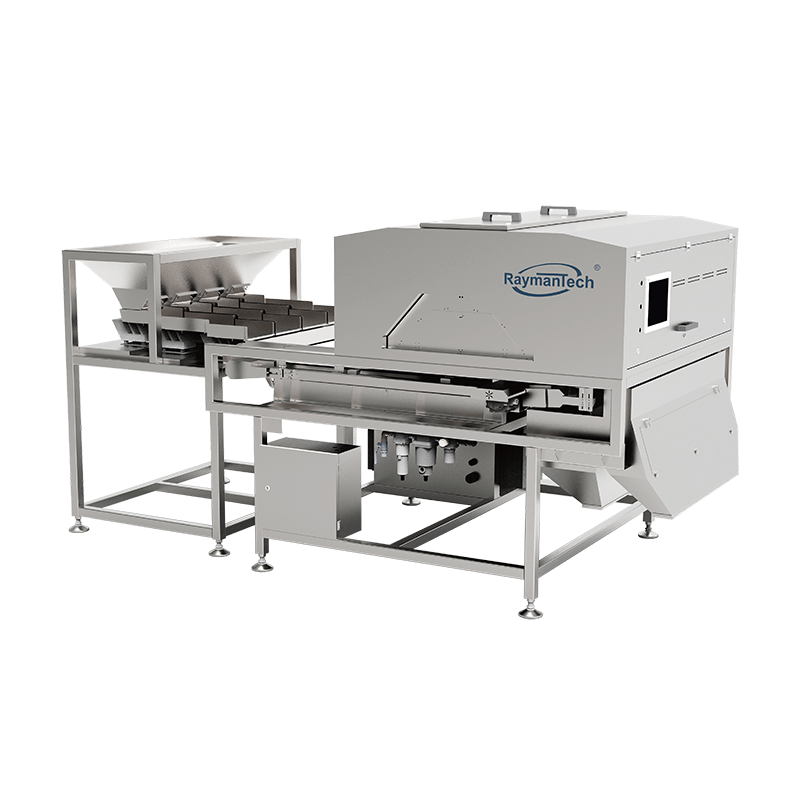
Recommedation: Small particle, flat products such...
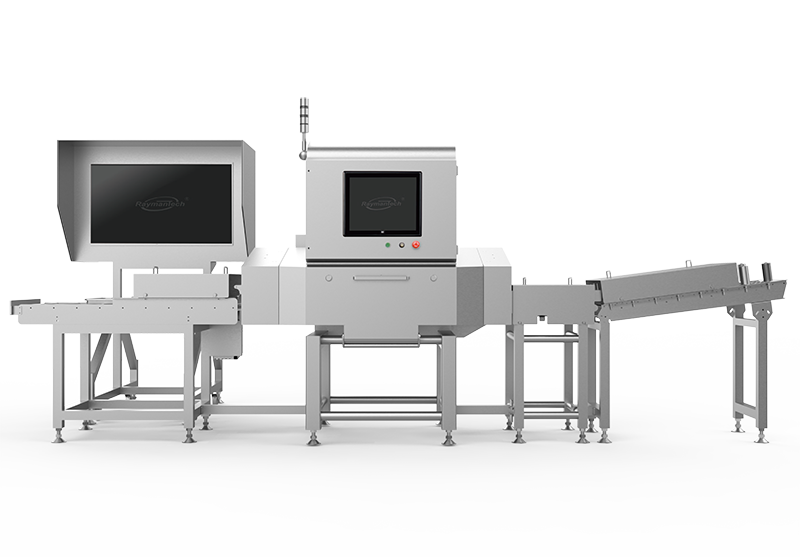
Automatic recognition and rejection, fish bone ins...
Select the most popular foreign trade service products to meet your diverse needs
Select the most popular foreign trade service products to meet your diverse needs







User Comments
Service Experience Sharing from Real Customers
Michael Rodriguez
Poultry Farm ManagerThis chicken X-ray equipment has revolutionized our quality control process. The image clarity is exceptional, allowing us to detect even the smallest bone fragments with precision. A game-changer for poultry processing.
Sarah Chen
Food Safety InspectorHighly reliable equipment for daily inspections. The automated detection system saves us significant time while maintaining accuracy. The user interface could be more intuitive, but overall excellent performance.
James Wilson
Processing Plant SupervisorOutstanding durability and consistent performance in our high-volume processing environment. The maintenance requirements are minimal, and the technical support team is responsive. Worth every penny for ensuring product quality.
Emily Thompson
Veterinary ResearcherPerfect for our poultry research facility. The high-resolution imaging helps us study bone density and development in chickens with incredible detail. The compact design fits well in our lab space.