 English EN
 中国 CN
中国 CN
.png)

Principle of X-ray Inspection Machines in the Food Industry
X-ray inspection machines have become indispensabl...
More

SQUID sensors achieve unprecedented energy resolution in material analysis. This leap allows scientists to distinguish elements with nearly identical X-ray signatures for the first time. A squid x ray machine enables the simultaneous analysis of thousands of signals. This capability dramatically increases the speed and detail of material studies, solving long-standing challenges.
| Detector Type | Energy Resolution (FWHM) | Photon Energy |
|---|---|---|
| Advanced TES/MMC Detectors | 1.25 eV | 5.9 keV |
| SQUID-Integrated MMC | 37.5 eV | 60 keV |
This technological advance provides solutions in fields from nuclear security to astrophysics.
Traditional X-ray spectroscopy provides valuable data, but it faces fundamental limitations when analyzing complex materials. Scientists must overcome these challenges to achieve truly precise characterization. The two primary hurdles are overlapping elemental signals and the inherent constraints of conventional detector technology.
X-ray analysis becomes difficult with complex samples. Multiple materials often occupy the same X-ray beam path. The detector then reads a single, combined signal based on total X-ray attenuation. This interaction is governed by physical principles like the photoelectric effect. However, different combinations of materials can produce identical attenuation signals, creating ambiguity.
This overlap creates a new, "equivalent" material from the detector's perspective. The system processes this combined signal as if it came from a single substance.
This phenomenon can lead to critical errors. The equivalent signal may mistakenly match a suspicious material, causing a false positive. Conversely, it could mask a targeted substance, resulting in a false negative and complete mischaracterization.
Conventional detectors lack the precision needed to resolve these ambiguous signals. Their performance is restricted by two main factors: energy resolution and electronic noise.
First, their energy resolution is insufficient for distinguishing between elements with very similar X-ray emission energies.
Silicon Drift Detectors (SDDs), a common technology, offer an optimal energy resolution of about 123-129 eV.
Germanium detectors perform better but still cannot resolve the finest spectral features that SQUID systems can.
Second, all conventional detectors suffer from electronic noise. Key contributors include thermal effects and amplifier read-out noise. This electronic interference degrades the signal-to-noise ratio, obscuring the true X-ray signal, especially at low exposures. This noise establishes a performance floor, preventing the detector from reaching its fundamental quantum limit.
To achieve this incredible precision, SQUID sensors do not work alone. They form a powerful partnership with another cryogenic component: the Transition-Edge Sensor (TES). This duo works in tandem, with the TES acting as the initial detector and the SQUID serving as a powerful amplifier.
A TES is an extremely sensitive thermometer made from a superconducting material. When a single X-ray photon strikes an attached absorber, its energy is converted into heat. This causes a minuscule, yet critical, temperature increase in the TES.
The TES is carefully maintained at its "transition temperature"—the precise point where it hovers between being a perfect superconductor (zero resistance) and a normal resistor. Even a tiny amount of heat from a photon is enough to increase its electrical resistance significantly.
Scientists engineer these sensors for maximum stability and sensitivity using specific material combinations.
Molybdenum/Gold (Mo/Au) bilayers are a common choice, with their transition temperature tuned to an optimal 100 millikelvin.
Other materials like Titanium/Gold (Ti/Au) and Hafnium/Gold (Hf/Au) are also in development for cryogenic detectors.
Niobium (Nb) contacts provide stable electrical leads, while materials like Bismuth are used for the X-ray absorbers.
The resulting electrical signal from the TES is incredibly faint and would be lost in the noise of conventional electronics. This is where the SQUID (Superconducting Quantum Interference Device) enters the picture. The TES is connected to an input coil that is magnetically coupled to the SQUID.
The change in the TES's resistance alters the current flowing through this coil, which in turn generates a tiny magnetic field. The SQUID is so sensitive that it can detect this minuscule change in the magnetic field—a change far too small for any other device to measure. It then converts this magnetic signal into a large, clean, and easily measurable voltage. This amplification step is what makes the entire squid x ray machine concept viable, transforming a nearly undetectable temperature spike into a robust piece of data.
The incredible sensitivity of a SQUID sensor is not magic; it is a direct result of applying quantum mechanics at a macroscopic level. At its heart, a SQUID operates as a highly precise converter, transforming an imperceptibly small magnetic field into a clear electrical signal. This process relies on a superconducting loop and the unique physics that govern it.
A SQUID is fundamentally a ring of superconducting material interrupted by one or two weak points known as Josephson junctions. These junctions are the key to the device's operation.
Parallel Josephson junctions are essential components of SQUID devices.
Engineers employ them specifically for the detection of extremely small magnetic fields.
The entire device must be cooled to cryogenic temperatures to maintain its superconducting state. Measurements are typically conducted below 4.2 Kelvin (-452°F / -269°C), the temperature of liquid helium. This extreme cold allows quantum effects to dominate the device's behavior. The operation of a squid x ray machine is founded on a principle called the DC Josephson effect.
In the absence of an external magnetic field, an input current divides equally between the two Josephson junctions in the superconducting loop.
When a tiny magnetic field from the TES passes through the loop, the loop generates its own screening current to counteract the field.
This induced current adds to the current in one branch of the loop and subtracts from the other, creating an imbalance.
A voltage suddenly appears across the device when the current in either branch exceeds the junction's "critical current"—the maximum current it can handle while remaining a superconductor.
This voltage spike is the SQUID’s initial response to the magnetic field generated by the X-ray photon hitting the TES.
The SQUID's primary function is to act as a flux-to-voltage converter. It translates the magnetic flux information into an electrical signal that standard electronics can process. This conversion hinges on a direct relationship between magnetic flux, quantum phase, and voltage.
The core principle is that the magnetic flux (Φ) passing through the superconducting ring directly influences the quantum phase difference (Δφ) across the Josephson junctions. The rate of change of this phase difference over time is directly proportional to the voltage across the junctions.
This effect enables the SQUID structure to convert a magnetic signal into a measurable voltage. The pick-up coil connected to the TES gathers the magnetic flux and transfers it to the SQUID. The SQUID then performs the conversion.
However, this initial voltage is still very small and requires further processing. A sophisticated readout circuit amplifies and digitizes the signal. These electronics must also operate at cryogenic temperatures to minimize noise. Key components in the readout circuit include:
Cryogenic Amplifiers: These provide the first stage of low-noise signal amplification.
Application-Specific Integrated Circuits (ASICs): Custom chips, often built with Silicon-Germanium (SiGe) transistors, are designed to handle the specific signal processing needs of the squid x ray machine.
MOS Switches: These are used for multiplexing, a technique that allows a single set of electronics to read out signals from thousands of detectors.
This complete chain—from magnetic flux to amplified digital signal—is what allows a single X-ray photon to be detected and its energy measured with unparalleled precision.
The true power of SQUID-based spectroscopy comes from scaling up. A single detector offers incredible precision, but modern scientific instruments require large arrays with thousands of pixels. Multiplexing is the key technology that makes reading out these massive arrays possible, transforming a single powerful sensor into a high-throughput imaging system.
Wiring thousands of individual detectors from a cryogenic stage to room-temperature electronics is physically impractical. Each wire introduces a significant heat load, threatening the stability of the ultra-cold system. SQUID readout multiplexers solve this problem by reducing the number of required wires by up to two orders of magnitude. This dramatically lowers the thermal load and simplifies the system's complexity.
This efficiency enables the readout of large detector arrays. Current multiplexing technologies are already achieving impressive scales:
Time-Division Multiplexing (TDM) systems currently read out 240-pixel arrays and are being designed for future 960-pixel detectors.
Frequency-Division Multiplexing (FDM) technology has demonstrated the simultaneous readout of 37 pixels with excellent energy resolution.
These advancements are paving the way for kilopixel-scale arrays, which will deliver unprecedented detail in material analysis.
One of the most effective methods for this task is microwave SQUID multiplexing (μMUX). This technique uses frequency to distinguish signals from different detectors, much like how a radio tunes into different stations. The process works in a few key steps:
Engineers couple each TES/SQUID detector to a unique superconducting microwave resonator. Each resonator has a distinct, high-frequency resonance.
All resonators are connected to a single, common transmission line or "feedline."
An X-ray photon hitting a detector changes its SQUID's properties, which slightly shifts the frequency of its paired resonator.
A software-defined radio (SDR) continuously monitors the feedline, detecting these tiny frequency shifts to identify which detector was hit and with what energy.
This elegant approach allows a single coaxial cable and amplifier to read out thousands of detectors simultaneously. Each detector effectively gets its own channel on the microwave "dial," enabling clean, parallel data acquisition.
The theoretical power of SQUID-based spectroscopy translates directly into transformative real-world capabilities. Scientists and engineers are applying this technology to solve some of the most complex challenges in national security, materials science, and astrophysics. The unprecedented energy resolution and high-throughput analysis are unlocking new frontiers of discovery.
Nuclear security agencies face the critical task of identifying and tracking nuclear materials. A squid x ray machine provides a powerful new tool for this mission. It offers a non-destructive way to analyze the composition of nuclear fuel with extreme precision, a process known as nuclear forensics.
Isotope Identification: SQUID detectors can distinguish between different isotopes of elements like uranium and plutonium. These isotopes have very similar X-ray emission energies that are impossible for conventional detectors to separate. This capability allows inspectors to verify the exact composition of nuclear fuel and detect unauthorized materials or changes.
Spent Fuel Analysis: Analyzing spent nuclear fuel is crucial for both safety and non-proliferation. The complex mixture of fission products creates a dense, overlapping X-ray spectrum. SQUID-based systems can deconstruct this signal, providing a complete inventory of the elements present.
This high-fidelity analysis gives authorities an unambiguous fingerprint of nuclear materials. It helps them confirm declarations from facility operators, track material history, and detect any diversion of materials for illicit purposes, significantly strengthening international safeguards.
Modern technology relies on advanced materials with precisely engineered properties. SQUID-based X-ray spectroscopy gives materials scientists an unparalleled view into the atomic and chemical structure of next-generation semiconductors and alloys.
The development of new metal alloys often involves adding trace elements to achieve desired properties like strength or corrosion resistance. SQUID detectors can precisely measure these tiny elemental concentrations. This helps researchers understand how dopants are distributed within the material and how they affect its performance.
In the semiconductor industry, even minuscule amounts of contamination can ruin a microchip.
Manufacturers use SQUID-based analysis to detect and map trace contaminants on silicon wafers.
The high energy resolution can distinguish between the contaminant and the substrate material, even when their signals are nearly identical.
This allows for faster quality control and helps engineers pinpoint the source of contamination in the manufacturing process.
This deep level of chemical analysis accelerates the research and development cycle, enabling the creation of more efficient, reliable, and powerful materials.
Astrophysicists seek to understand the cosmos by analyzing the X-rays emitted by distant celestial objects like black holes, neutron stars, and supernova remnants. SQUID-based detectors are poised to revolutionize X-ray astronomy by providing a much clearer view of these energetic events.
The universe is a dynamic place filled with hot gas and violent cosmic events. The X-rays from these sources carry vital information about their temperature, chemical composition, and motion. SQUID detectors can capture this information with stunning detail.
While not yet operational on space telescopes, the technology is advancing rapidly.
NIST and NASA Collaboration: The U.S. National Institute of Standards and Technology (NIST) is actively developing SQUID-based X-ray detectors with funding from NASA.
Future Mission Integration: These advanced sensors are being designed for direct integration with new magnetic calorimeters. They are prime candidates for several potential future astrophysics missions.
Enabling New Discoveries: Researchers expect to demonstrate two-dimensional readout versions soon. This progress aims to enable groundbreaking new instrumentation that can map the chemical makeup of supernova remnants or measure the subtle gravitational effects near a black hole.
This next generation of detectors will help answer fundamental questions about the formation of galaxies and the life cycle of stars.
SQUID sensors provide a revolutionary leap in X-ray spectroscopy. They deliver unmatched energy resolution—often ten times better than conventional detectors—and high-speed, multi-channel readout. This technology actively solves critical problems in national security and advanced materials. As researchers scale detector arrays for future missions, SQUID-based spectroscopy is becoming an indispensable tool.
SQUID sensors require cryogenic temperatures, typically below 4.2 Kelvin. This extreme cold enables the quantum effects of superconductivity, which are essential for the device's high sensitivity and operation.
No, they are distinct but work together.
The Transition-Edge Sensor (TES) acts as the thermometer, detecting the heat from an X-ray.
The SQUID acts as the amplifier, measuring the TES's signal.
The primary advantage is its superior energy resolution. A squid x ray machine can distinguish between elements with nearly identical X-ray signatures, a task impossible for conventional detectors.

We provide you with comprehensive foreign trade solutions to help enterprises achieve global development
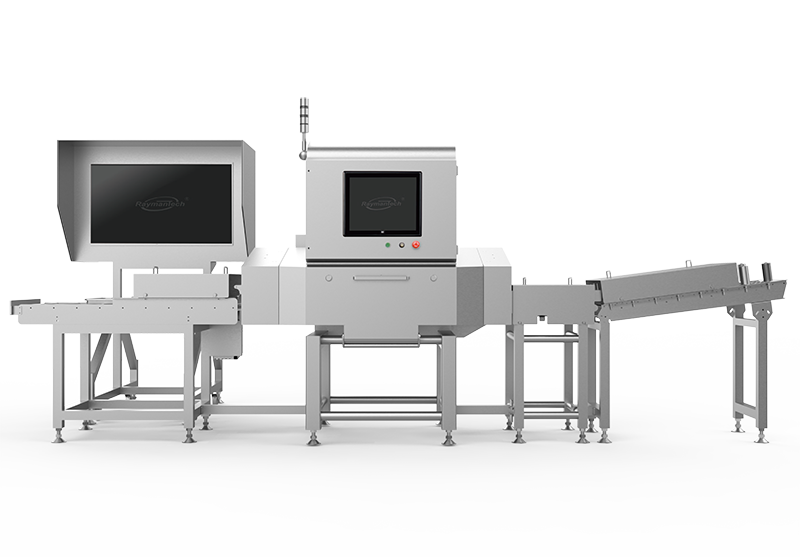
Automatic recognition and rejection, fish bone ins...
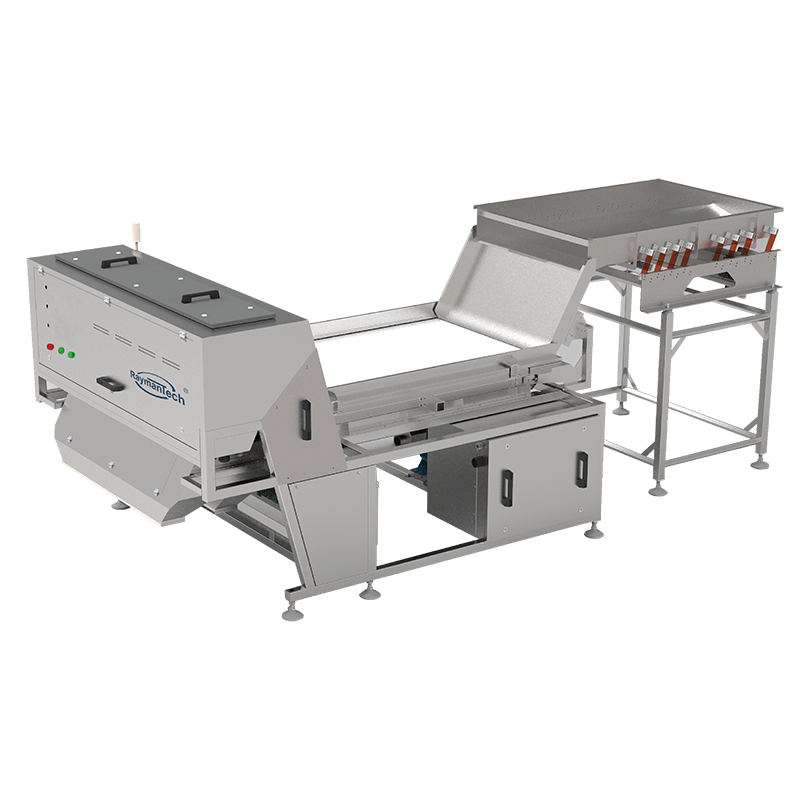
Recommedation: Chili, walnut, peanuts, soybeans, c...
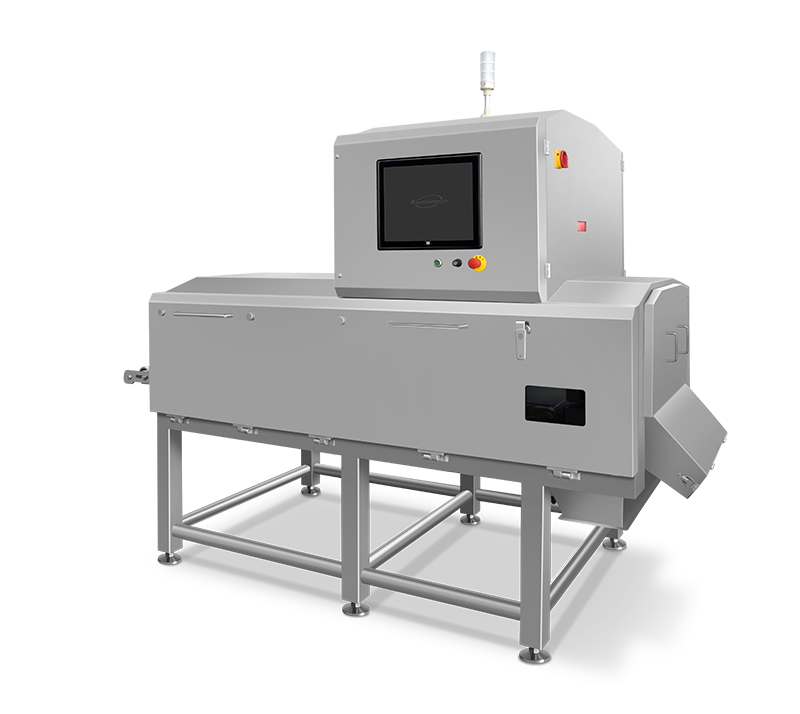
Conventional and unconventional contaminant detect...
High cost performance, compact design, high sensit...
Select the most popular foreign trade service products to meet your diverse needs
Select the most popular foreign trade service products to meet your diverse needs








User Comments
Service Experience Sharing from Real Customers
Michael Rodriguez
Radiology TechnicianThe Squid X-ray machine has revolutionized our diagnostic workflow. The image clarity is exceptional, and the automated positioning system saves us valuable time during high-volume periods. A game-changer for modern radiology departments.
Sarah Chen
Quality Control ManagerAs someone who oversees manufacturing quality, I'm impressed by the Squid X-ray's precision in detecting micro-fractures. The AI-assisted defect recognition has reduced our false positive rate by 30%. Outstanding reliability for industrial applications.
David Kim
Security SupervisorDeploying the Squid X-ray at our airport checkpoint has significantly improved threat detection. The dual-energy scanning provides remarkable material differentiation, though the interface could be more intuitive. Overall, highly effective for security screening.
Jennifer Walsh
Research ScientistIn our materials science lab, the Squid X-ray's micro-CT capabilities have enabled breakthrough research in composite materials. The 3D reconstruction software is incredibly sophisticated yet user-friendly. Worth every penny for advanced research institutions.