 English EN
 中国 CN
中国 CN
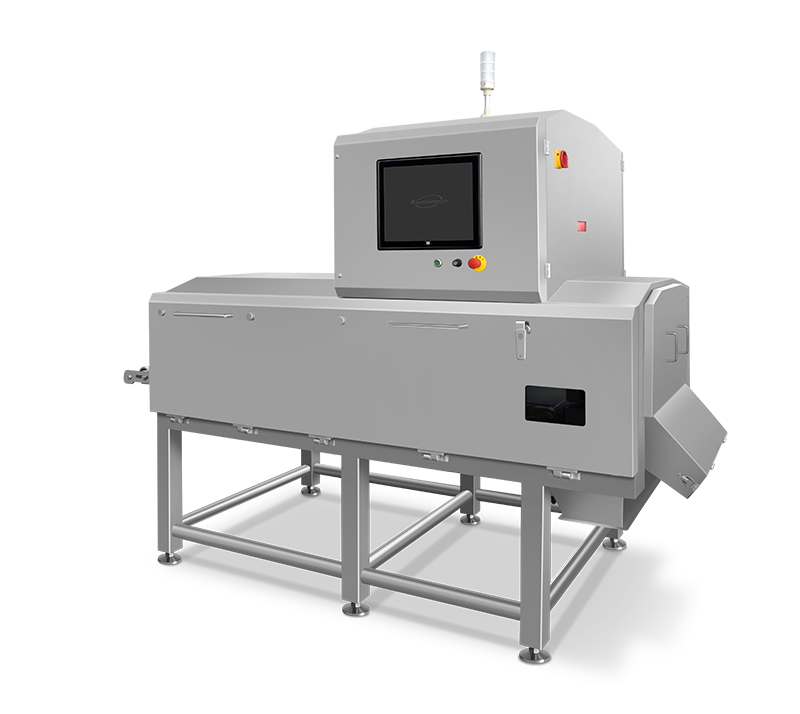
.png)

Introduction to RaymanTech Optical Sorters for Farm Products and Food Processors
RaymanTech, as a leading provider of inspection an...
More

The global confectionery market demonstrates substantial growth, presenting manufacturers with significant opportunities.
| Report Attribute | Details |
|---|---|
| Market Size in 2023 | USD 206.97 Billion |
| Market Forecast in 2032 | USD 278.36 Billion |
| Growth Rate (2024-2032) | CAGR of 3.36% |
An advanced sugar candies and fudge optical sorter uses AI for near-perfect defect detection. The technology identifies subtle imperfections in size, shape, and composition. This precision directly enhances product quality, boosts efficiency, and reduces costly food waste.
Several core artificial intelligence technologies work together to achieve unprecedented accuracy in confectionery sorting. These engines provide the intelligence that transforms a good sorting process into a nearly perfect one.
Modern sorters utilize advanced machine vision systems that function as powerful digital eyes. These systems capture high-resolution images across multiple light spectrums. This capability allows the machine to detect minute imperfections that are often invisible to the human eye. It can identify subtle color deviations, hairline cracks in fudge, or incorrect shapes with extreme precision, providing the raw data needed for analysis.
Deep learning algorithms represent the brain of the sorting operation. Engineers train these complex neural networks using thousands of images of both perfect and defective candies. Through this process, the AI learns to recognize the intricate patterns associated with various flaws. A modern sugar candies and fudge optical sorter powered by deep learning can therefore distinguish between a desirable product and a defective one with remarkable accuracy, far surpassing traditional rule-based sorting methods.
Predictive analytics enables the sorting system to anticipate and prevent issues before they impact production. AI algorithms analyze operational data in real-time to identify patterns and optimize processes. This proactive approach helps maintain peak efficiency. Key functions include:
Monitoring equipment performance to predict potential failures.
Alerting operators to issues like slowed speeds or jams.
Analyzing Key Performance Indicators (KPIs) like yield and waste levels.
AI algorithms also learn from operational data, continuously enhancing sorting techniques and adapting to changing production conditions without constant manual calibration. This self-learning capability improves accuracy and predictive power over time.
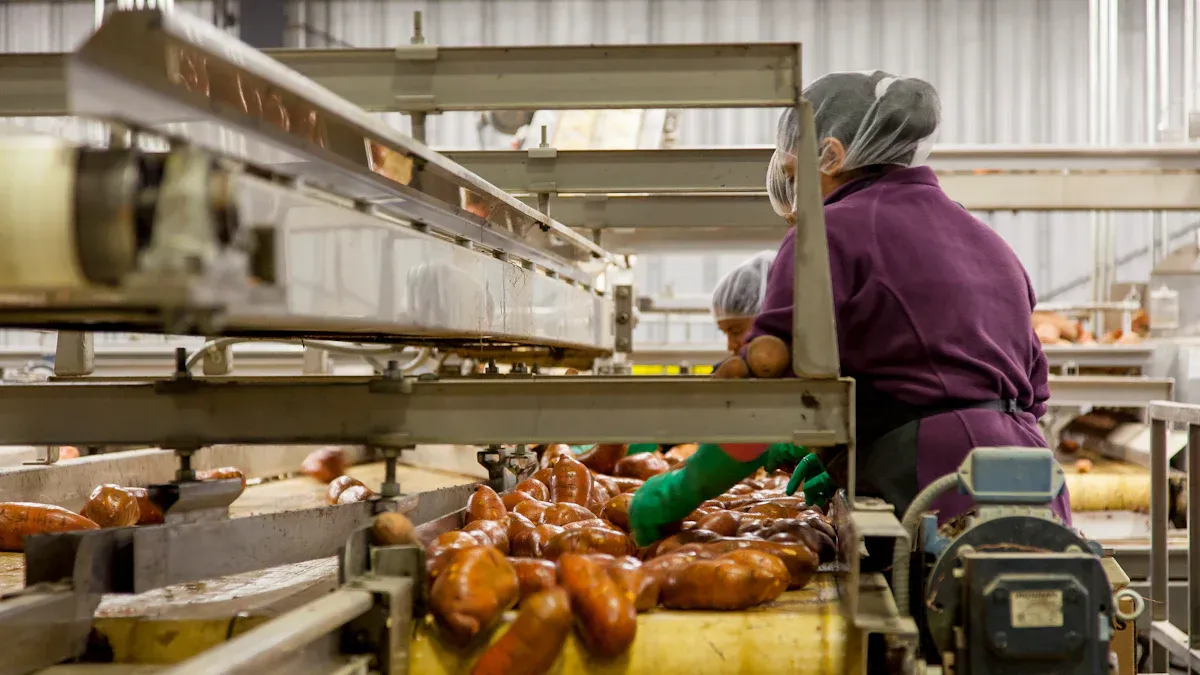
An AI-powered sugar candies and fudge optical sorter combines advanced imaging, intelligent decision-making, and precise mechanical action. This synergy creates a seamless workflow that identifies and removes imperfect products with incredible speed and accuracy. The system inspects each piece of candy or fudge as it moves along a conveyor, makes a split-second judgment, and executes a flawless removal, all without interrupting the production flow.
Hyperspectral imaging forms the analytical core of the sorting process. Unlike standard cameras that capture images in three broad color bands (red, green, and blue), hyperspectral sensors record data across hundreds of narrow spectral bands. This capability extends beyond the visible spectrum into the near-infrared region, allowing the system to analyze an object's chemical makeup.
This technology provides a unique "spectral fingerprint" for each item. It can detect subtle variations in chemical composition that are invisible to the naked eye. Key applications include:
Identifying incorrect sugar-to-fat ratios in fudge.
Detecting unwanted moisture levels that could affect texture.
Spotting foreign materials or chemical adulterants.
By combining spectroscopy with imaging, this non-invasive technique extracts both spatial and spectral information. This dual analysis is crucial for reliably estimating sugar content and identifying compositional differences, ensuring product consistency and safety.
Once the AI identifies a defective product, the system must remove it from the production line without affecting acceptable items. AI-guided robotic ejection systems accomplish this with remarkable precision. After a neural network flags a defect, the system converts the candy's coordinates into a precise command for an ejection mechanism.
Most systems use a targeted airflow mechanism. A programmable controller activates specific air nozzles at the exact moment the defective candy passes. This puff of air alters the item's trajectory, diverting it into a rejection bin. Good products continue undisturbed along their original path. This process happens at an incredible speed, ensuring high throughput.
| Metric | Typical Performance |
|---|---|
| Ejection Precision | 0.1 milliseconds |
| Processing Capacity | Thousands of items per second |
| Material Sorting Capacity | Up to 20 tons per hour |
This method is highly effective, preventing damage to adjacent products and minimizing the accidental rejection of good candy.
A key advantage of AI-powered sorters is their ability to adapt and improve over time. The self-learning capability allows manufacturers to introduce new products without extensive manual reprogramming. When a new candy or fudge variety is introduced, operators feed the system images of both acceptable and unacceptable examples. The AI's neural network then trains itself to recognize the specific attributes of the new product.
This process is demonstrated by leading equipment providers in the confectionery space.
RaymanTech offers AI-powered optical sorting systems designed specifically for the confectionery industry.
BIOMETiC provides its Q Eye Smart sorter, which applies AI to inspect products in the ice cream and confectionery sectors.
Case studies highlight the real-world application of this adaptability. For instance, Intelly AI implemented an automated optical inspection solution for a candy manufacturer by training neural networks on new product images. This allowed the company to maintain high-speed, low-cost quality control. Similarly, a project using a Husky Lens AI camera demonstrated how a system could quickly learn to sort M&Ms by color, showcasing the technology's flexibility and ease of deployment for new sorting tasks.

The integration of artificial intelligence into confectionery production delivers transformative advantages. AI-powered systems elevate quality control, optimize resource utilization, and promote sustainability. These benefits directly impact a manufacturer's bottom line and market position.
AI-powered sorters identify imperfections with a level of precision that human inspectors cannot consistently match. The technology detects subtle flaws in color, size, shape, and texture, ensuring only the highest quality products reach the consumer. This meticulous inspection process moves the production line closer to a near-zero defect rate.
This enhancement in quality control directly strengthens brand reputation. Across manufacturing industries, companies using AI-driven quality systems report significant improvements. They typically see a 30-60% reduction in customer quality complaints and a 10-25% improvement in customer satisfaction scores. A flawless product experience fosters consumer trust and builds lasting brand loyalty. 🍬
A primary challenge in traditional sorting is the false rejection of acceptable products. Older systems often discard good candy along with the bad, leading to reduced yield and lost revenue. AI-powered systems solve this problem with superior intelligence. A modern sugar candies and fudge optical sorter uses dynamic sensitivity thresholds and multi-sensor fusion to distinguish between acceptable variations and true defects. This continuous optimization ensures the system becomes more accurate over time.
This precision significantly minimizes the accidental rejection of good products. The result is a higher volume of saleable candy from the same amount of raw material. The performance metrics below illustrate the high accuracy of these AI systems.
| Metric | Value |
|---|---|
| Precision | 0.93 |
| Recall | 0.87 |
| F1-score | 0.90 |
These scores demonstrate the system's ability to correctly identify defects while retaining good products, directly maximizing the overall product yield.
Maximizing yield has a powerful secondary benefit: a significant reduction in food waste. Every piece of candy that is correctly identified as good and kept on the production line is one less item contributing to industrial waste. This makes AI sorting a key tool for sustainable manufacturing. ♻️
Recent studies confirm AI's potential to create more sustainable food systems. A comprehensive literature review analyzing AI's role in food manufacturing highlights several key environmental benefits. Researchers found that AI can:
Enhance operational efficiency by optimizing resource use.
Reduce food waste through predictive analytics and precise sorting.
Improve quality control with real-time monitoring systems.
Facilitate a transition to circular economy practices.
Ultimately, studies conclude that AI offers profound capabilities to revolutionize food production and reduce environmental footprints. By minimizing waste at the source, confectionery manufacturers can improve their sustainability credentials and contribute to a more efficient global food supply chain.
AI integration delivers substantial gains in operational efficiency by accelerating production, standardizing quality, and minimizing interruptions. These improvements allow confectionery manufacturers to produce more, waste less, and operate with greater reliability.
AI-powered sorting systems operate at speeds far exceeding manual labor or traditional automated methods. A modern sugar candies and fudge optical sorter processes thousands of items per minute, dramatically increasing the volume of products inspected. This high-speed capability reduces bottlenecks and accelerates the entire production line.
| Sorting Method | Throughput (items/packages per minute) |
|---|---|
| AI Sorter (Confectionery) | Hundreds to thousands |
| Traditional Automated Systems | 15 to 120 |
| Manual Sorting | Significantly less than automated systems |
This enhanced speed, combined with high accuracy, ensures that more saleable product moves through the line in less time, directly boosting overall throughput.
AI systems enforce quality standards with unwavering consistency, operating 24/7 without fatigue. They apply the exact same inspection criteria to every single item, regardless of the production shift or factory location. AI achieves this by:
Monitoring production variables like temperature and ingredient ratios.
Performing precise structural and dimensional checks.
Verifying the accuracy of labels and packaging.
Detecting subtle cosmetic flaws that deviate from quality standards.
This continuous, objective monitoring ensures every product meets the brand's quality promise, strengthening customer satisfaction and trust.
Predictive maintenance is a key feature of advanced AI systems. By analyzing real-time operational data, the AI can anticipate equipment failures before they occur.
By using AI to predict machine failure and maintenance needs, companies can reduce downtime while boosting efficiencies.
This proactive approach allows maintenance teams to schedule repairs during planned stoppages, avoiding costly, unexpected shutdowns. For example, Mars Incorporated implemented AI for predictive maintenance and achieved a 20% reduction in downtime. This strategy transforms maintenance from a reactive fix to a planned, efficiency-driving activity.
Innovations like deep learning and AI-guided robotics transform confectionery sorting, elevating the process from good to near-perfect. Manufacturers now view AI adoption as a critical step. This technology provides a decisive competitive edge in product quality and operational efficiency, securing a stronger market position for forward-thinking brands. 📈
AI systems detect foreign materials and compositional flaws invisible to the human eye. This capability ensures a safer, higher-quality product for consumers.
Yes. Neural networks train on new product images. This self-learning feature allows rapid adaptation to different candy shapes, sizes, and colors without extensive manual reprogramming.
Hyperspectral imaging analyzes a candy's chemical makeup. Key advantages include:
Identifying incorrect sugar content.
Detecting unwanted moisture levels.
Ensuring consistent product composition.

We provide you with comprehensive foreign trade solutions to help enterprises achieve global development
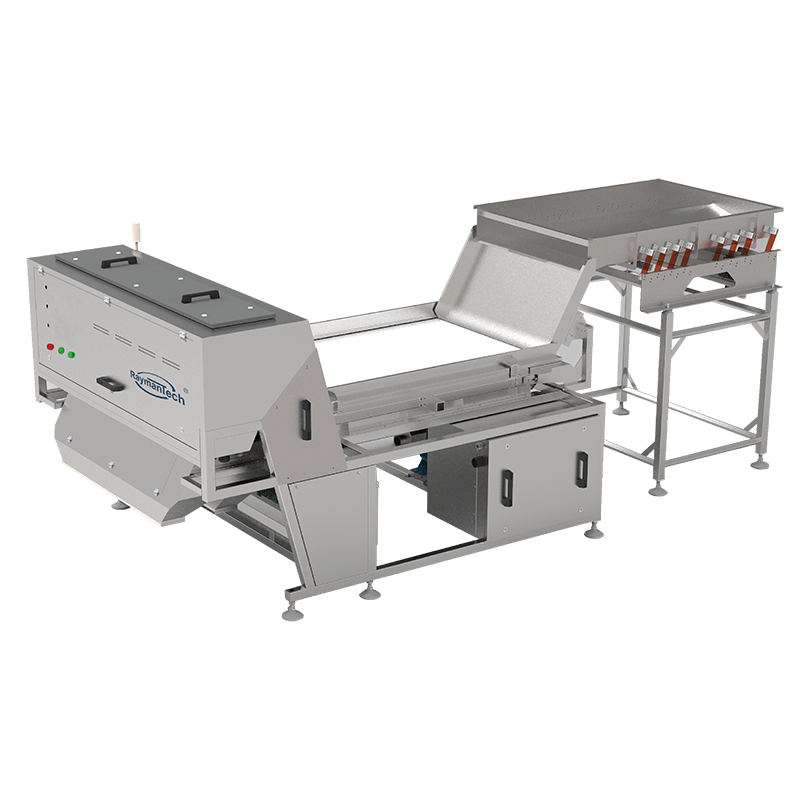
Recommedation: Chili, walnut, peanuts, soybeans, c...
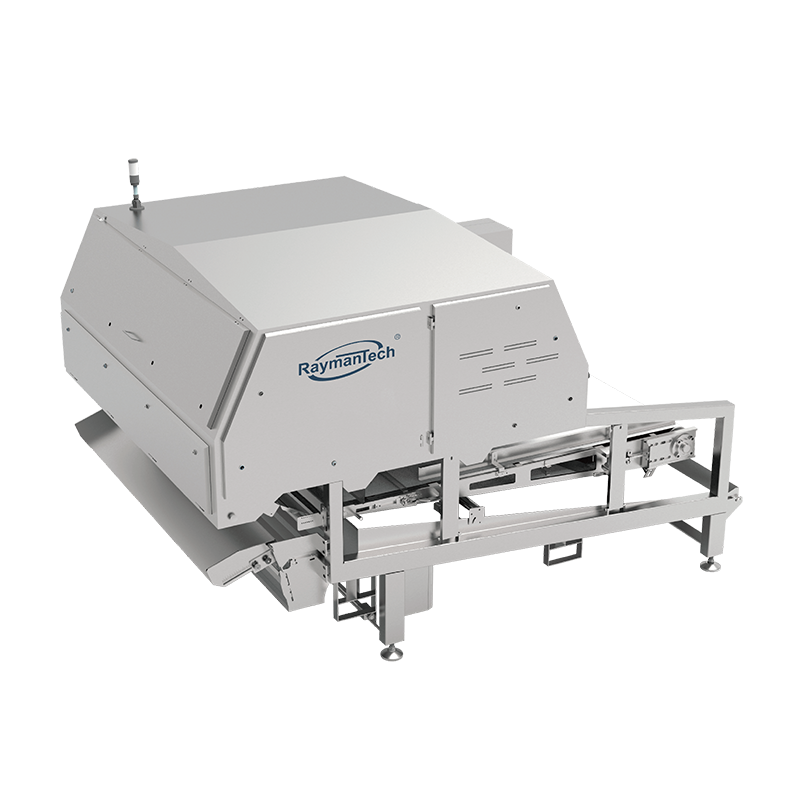
Recommedation: Frozen vegetables such as green be...
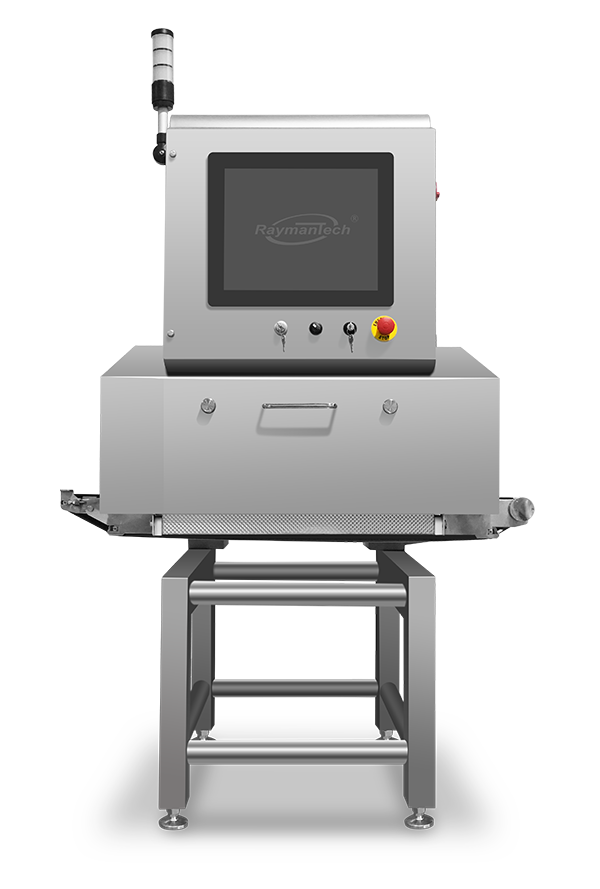
Ultra-fine contaminants detection, UHD X-Ray detec...
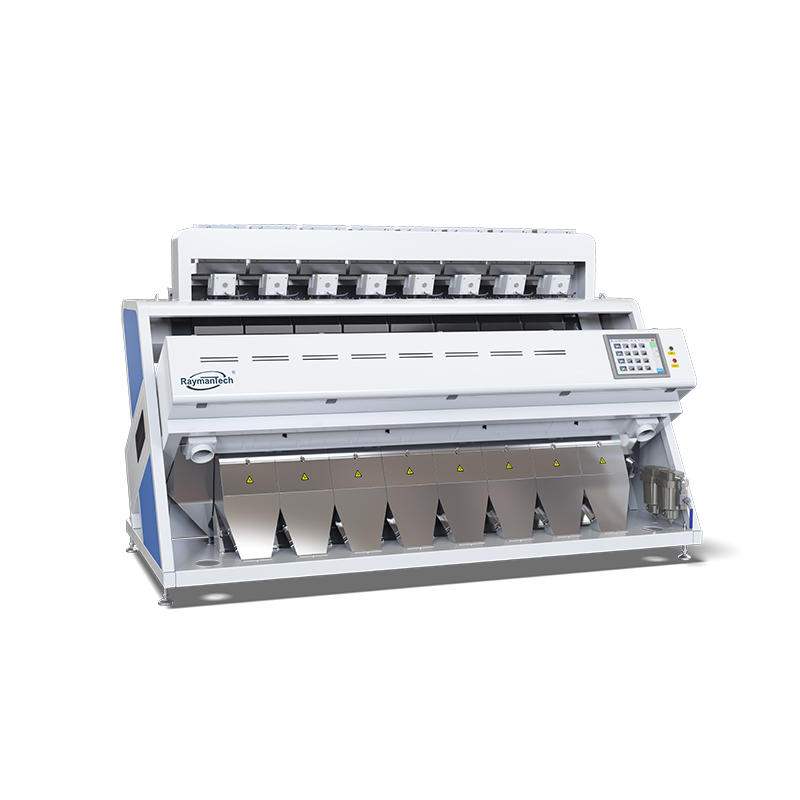
Recommedation: Rice, wheat, corn, grain, pulses, s...
Select the most popular foreign trade service products to meet your diverse needs
Select the most popular foreign trade service products to meet your diverse needs









User Comments
Service Experience Sharing from Real Customers
Michael Rodriguez
Production ManagerThe Sugar Candies and Fudge optical sorter has revolutionized our production line. The accuracy in detecting and removing defective products is remarkable, significantly reducing waste and improving overall quality.
Sarah Chen
Quality Control SupervisorOutstanding performance from this optical sorter! It handles both our sugar candies and fudge with incredible precision. The color sorting capability is particularly impressive, ensuring only perfect products reach packaging.
David Thompson
Plant Operations DirectorHighly efficient optical sorter that has boosted our productivity by 30%. The machine consistently identifies imperfections in both transparent candies and opaque fudge with impressive accuracy. Minor learning curve for setup, but well worth it.
Jennifer Wallace
Food TechnologistThis optical sorter exceeds expectations for both sugar candies and fudge products. The advanced detection system eliminates foreign materials and color defects we previously missed. Essential equipment for any serious confectionery business.